
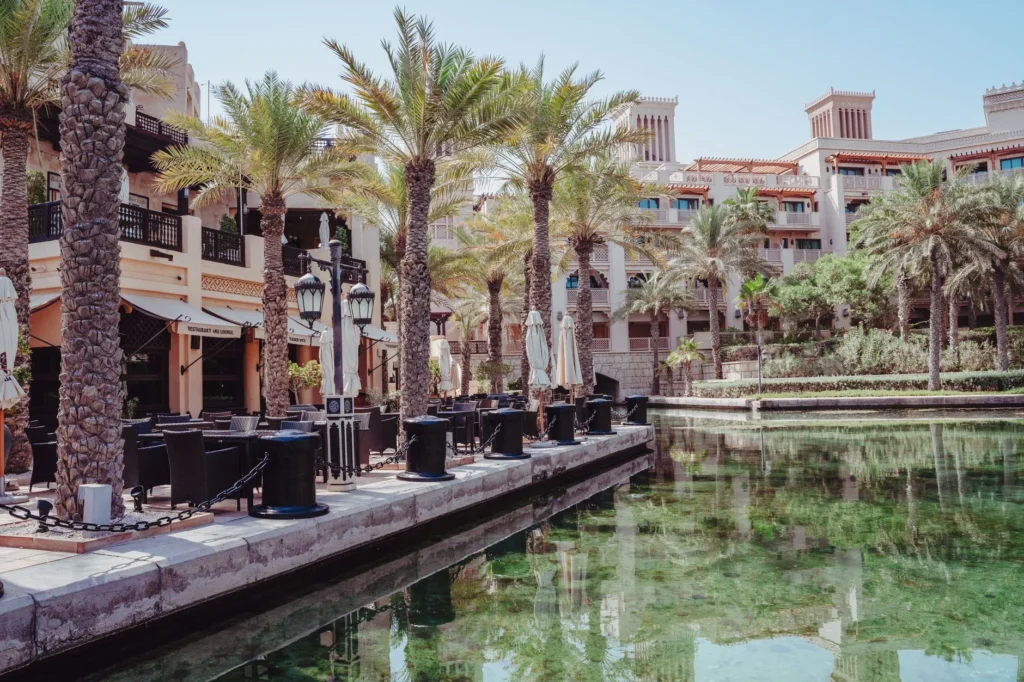
Jumeirah is where Dubai’s coastline feels most like a neighborhood. Along and around Jumeirah Beach Road, low-rise villas sit beside cafés, boutiques, mosques, public beaches and some of the city’s most recognisable resorts. It is a useful part of Dubai to explore if you want beach time without staying in a high-rise business district, while still being close to Downtown Dubai, Old Dubai, Palm Jumeirah and Dubai Marina.
This is not a separate city or a self-contained resort island. Jumeirah is a broad coastal district within Dubai, and visitor itineraries often spill into adjacent Umm Suqeim, Al Wasl, Al Safa and Madinat Jumeirah. That makes precise planning worthwhile: Jumeirah Open Beach, Jumeirah Mosque and Etihad Museum are different experiences from the resort beaches around Madinat Jumeirah, while Palm Jumeirah and Jumeirah Beach Residence are separate areas altogether.
For Jumeirah itself, allow two or three days. With extra time, it also makes a comfortable base for exploring Downtown Dubai, the historic creek districts, the Palm and the desert.
What Makes Jumeirah Special
Jumeirah suits travelers who want a more relaxed coastal setting than Downtown Dubai or Dubai Marina. Its streets are spread out rather than concentrated around one landmark, but that is part of the appeal. A morning can combine a cultural visit with coffee on Jumeirah Beach Road, followed by a public beach and an evening meal overlooking the water.
The district offers several sides of Dubai in a relatively compact part of the city:
- Public beaches, promenades and watersports
- Emirati culture and Islamic architecture
- Luxury hotels, beach clubs and destination dining
- Low-rise residential streets and independent cafés
- Easy access to Al Wasl, Al Safa, Downtown and the wider coast
Jumeirah is particularly good for couples, families and food-focused travelers. It also works well for visitors who prefer taxis and short local journeys over spending every day around a metro station. If you want a dense cluster of attractions that can all be reached on foot, Downtown Dubai may be more convenient. Jumeirah rewards a slower, more flexible approach.
Weather and the Best Time to Go
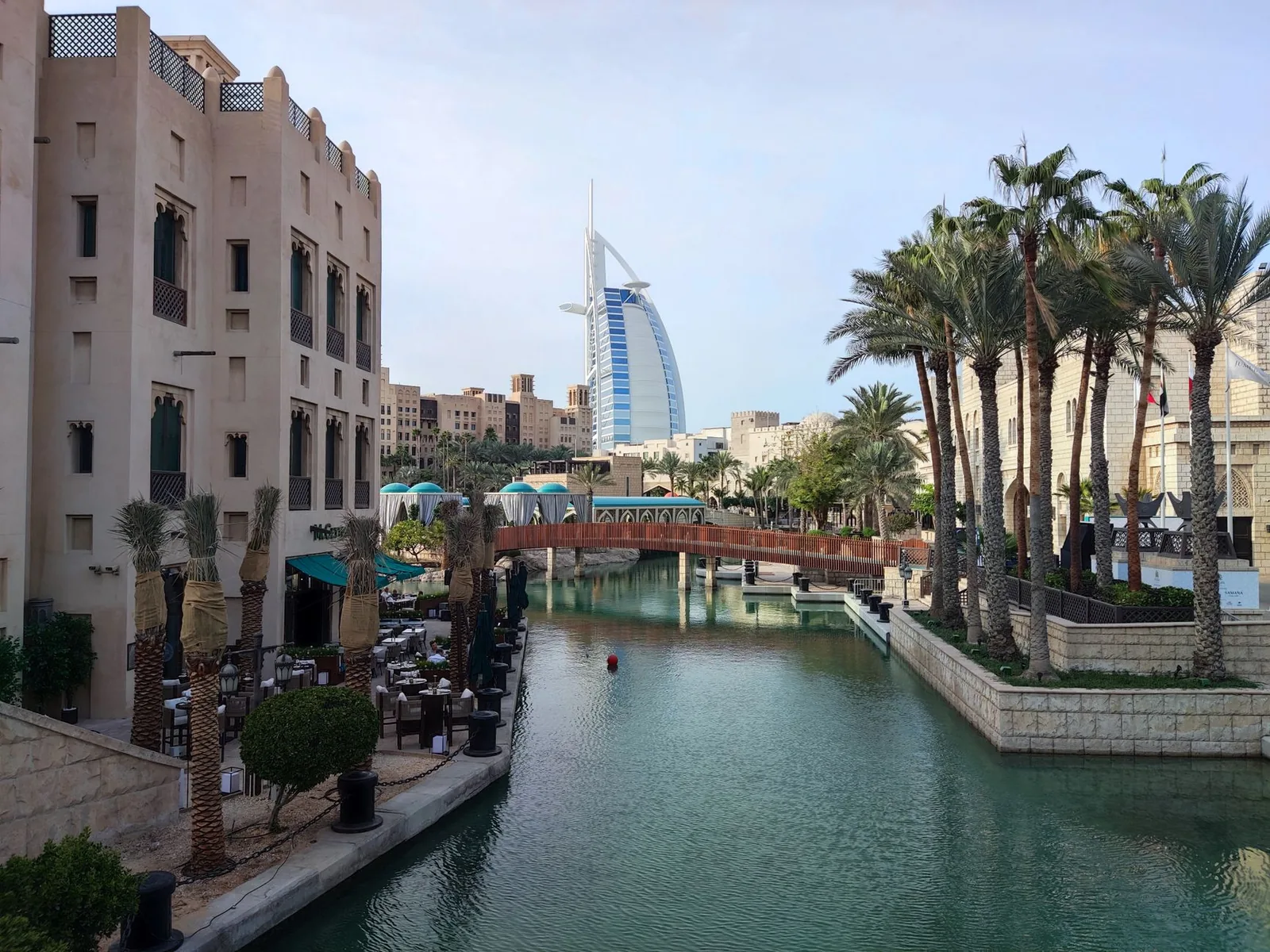
October through April is generally the most comfortable season for Jumeirah’s beaches, promenades, outdoor dining and cultural sightseeing. Typical temperatures during Dubai’s milder season are around 20°C to 30°C, although conditions vary.
December to February usually offers the easiest weather for long beach visits and walking. It is also a busy period, and hotel, tour and attraction prices may rise with demand. October and November bring increasingly comfortable temperatures, while March and early April can still be excellent for outdoor plans before the heat builds.
May through September is substantially hotter. Summer averages can reach the high-30s to mid-40s, so plan beaches and canal walks for sunrise or evening. Use museums, malls, resort facilities and other air-conditioned attractions during the middle of the day.
Check Ramadan dates for your travel year. Restaurants, attractions and cultural sites generally remain available, but public schedules, dining arrangements and opening hours may change.
Getting Around Jumeirah
Jumeirah is easiest to explore with a combination of short taxi journeys, buses and walking between individual clusters. There is no Dubai Metro station directly serving the main Jumeirah neighborhood. The Dubai Tram serves the wider coastal corridor around Al Sufouh, Palm Jumeirah and JBR, but buses and taxis are generally more useful for Jumeirah Beach Road and the beaches.
Dubai’s nol card is used on the metro, buses, tram and marine transport. Current routes, fares and service hours should be checked through the RTA network or the S’hail journey planner. Cash is not accepted for ordinary RTA public-transport journeys.
Walking works well along selected beaches, at Souk Madinat and beside the canal. It is less practical for covering the full length of Jumeirah Beach Road, particularly in summer. Taxis are often the simplest option between the airport, hotels, museums, beaches and restaurants.
From Dubai International Airport, the Metro Red Line runs from Terminals 1 and 3. You will usually need a bus or taxi for the final connection to a Jumeirah hotel or beach. An official airport taxi provides a direct alternative and airport taxi ranks operate around the clock. The airport currently lists a starting airport taxi fare of AED 25, but the final cost depends on destination, traffic and applicable supplements.
A car can help if you plan to combine dispersed beaches, museums and nearby districts. Parking and valet arrangements vary, so check each venue rather than assuming parking will be free.
Where to Base Yourself in Jumeirah
Find places to stay. Search stays on VibrantGateways →
Jumeirah is spread across a large coastal area, and exact boundaries between Jumeirah 1, Jumeirah 2 and Jumeirah 3 are informal in visitor use. Choose accommodation by the experience you want rather than by the name alone.
Jumeirah 1
The area around Jumeirah Mosque and the eastern section of Jumeirah Beach Road is convenient for cultural sightseeing, local restaurants and access to the coast. It has a more residential character than the resort areas farther west.
Jumeirah 2 and Jumeirah 3
These predominantly low-rise villa districts offer access toward beaches, cafés, restaurants, Al Wasl, Al Safa and the canal. They can work well for travelers who value space and a neighborhood setting, but check the precise location carefully because walking distances can be greater than they appear on a map.
The Jumeirah and Umm Suqeim resort corridor
Around Madinat Jumeirah, Burj Al Arab and the wider Umm Suqeim waterfront, accommodation is geared more toward resort stays, beach access, dining and leisure facilities. This is a strong choice for a classic Dubai beach holiday, particularly for couples and families who plan to spend significant time at the hotel.
Madinat Jumeirah
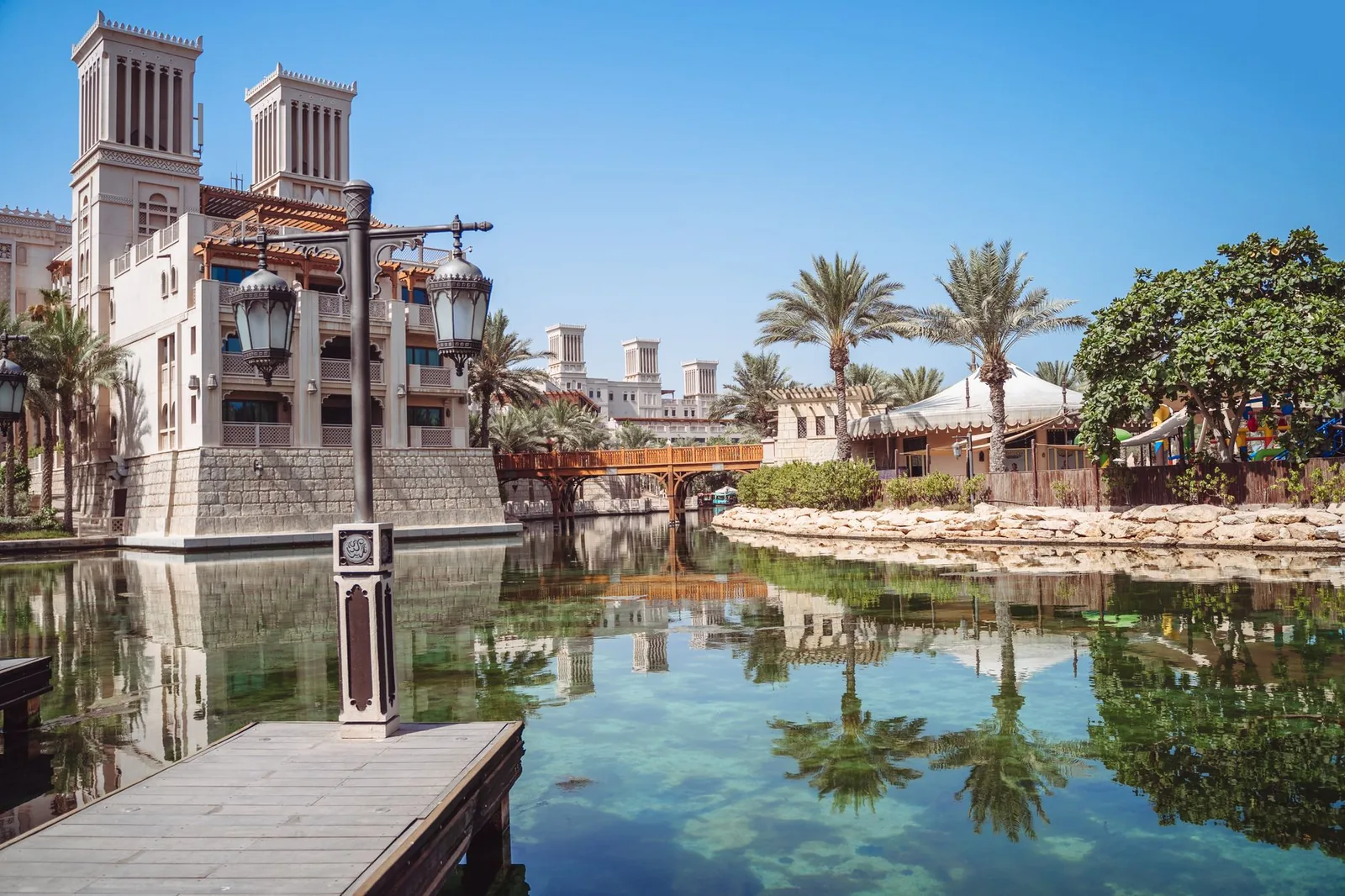
Madinat Jumeirah is a resort and entertainment complex rather than a conventional neighborhood. Staying nearby places you close to Souk Madinat, restaurants, waterways and Burj Al Arab views, but it may feel less like everyday residential Jumeirah.
Do not confuse Jumeirah with Jumeirah Beach Residence, Palm Jumeirah or Jumeirah Lakes Towers. These are separate areas with different transport patterns and atmospheres.
Which Jumeirah experience would you most like to prioritise?
Best Things to Do in Jumeirah
Spend time at Jumeirah Open Beach
Jumeirah Open Beach is one of the simplest ways to enjoy Dubai’s coast without booking a hotel or beach club. It is a public beach with public showers and toilets, and it gives visitors a straightforward stretch of shoreline for swimming, relaxing and watching the city’s changing skyline.
Beach conditions, lifeguard coverage and temporary access arrangements can change, so check local signage on the day. Bring sun protection, water and a cover-up for leaving the beach. In the hotter months, early morning and late afternoon are far more comfortable than the middle of the day.
Nearby beach access points can have different rules. Do not assume that every stretch of sand around Jumeirah is free or publicly accessible: hotel beaches, beach clubs and commercial venues operate separately.
Visit Jumeirah Mosque
Jumeirah Mosque is one of Dubai’s most important cultural attractions and one of the city’s mosques that welcomes non-Muslim visitors. Its public program explains Islamic traditions and Emirati culture in an accessible way, with light Emirati refreshments included in the visit.
The mosque is in Jumeirah 1, on Jumeirah Beach Road. The official listing currently gives public sessions at 10:00 and 14:00 from Saturday to Thursday, but times, prices and Ramadan arrangements can change. Check current details before setting out. The current listed admission is AED 55.
Dress modestly, covering the shoulders, arms and legs. Women should bring a head covering or use the provision available at the site. A mosque visit is best treated as a cultural experience rather than a quick photo stop, so allow enough time for the explanatory program.
Learn about the UAE at Etihad Museum
Etihad Museum explores the formation and modern history of the United Arab Emirates, with particular emphasis on the period leading to federation between 1968 and 1974. The site includes Union House, where the UAE constitution was signed in 1971.
It is a useful indoor stop during the hotter part of the day and provides historical context that is easy to miss when focusing only on Dubai’s contemporary architecture. The museum is in the Al Mina area near Jumeirah Street. Dubai Culture information currently lists daily opening from 10:00 to 20:00, with last entry at 19:00, but opening hours, admission categories and guided tours should be confirmed before visiting.
A practical pairing is Jumeirah Mosque in the morning followed by Etihad Museum, then lunch or a beach visit later in the day.
Walk or eat around Jumeirah Beach Road
Jumeirah Beach Road is the district’s main visitor corridor. It is lined with restaurants, cafés, boutiques, mosques, villas and access points toward the coast. Rather than one single attraction, it is a way to experience Jumeirah’s everyday character and its contrast with Dubai’s glass towers.
The road is long and busy, and it is not uniformly comfortable for walking. Choose a small cluster of stops, then use a taxi or bus for the next section. In cooler months, selected stretches are enjoyable on foot, particularly when combined with a beach or dining reservation.
The neighboring Al Wasl area adds more lifestyle venues, including City Walk, Boxpark and The Green Planet. These are separate districts and should not automatically be described as being inside Jumeirah, but they are convenient additions to a Jumeirah itinerary.
Try watersports and beach food at Kite Beach
Kite Beach is in adjacent Umm Suqeim, just off Jumeirah Beach Road, and is commonly included in wider Jumeirah itineraries. It is known for watersports, casual beach food and active outdoor recreation. Depending on current operator availability and sea conditions, activities may include equipment-based watersports and paddling experiences.
Check age requirements, weather restrictions, equipment availability and cancellation terms before booking. The beach is also a good choice for travelers who prefer a livelier, more active atmosphere than a quiet public beach. Sunset and early evening are generally appealing times to combine outdoor activity with food, but seasonal operating hours vary.
Explore Souk Madinat Jumeirah
Souk Madinat Jumeirah recreates the atmosphere of an Arabian marketplace with shaded walkways, shops, cafés, restaurants and waterways. It is one of the most atmospheric places near Jumeirah for an evening meal, especially if you want views toward the Burj Al Arab without committing to a formal hotel experience.
Abra rides operate through the waterways, and the venue is wheelchair friendly. The official listing currently gives shop hours of 10:00 to 23:00 and restaurant hours of 08:00 to 02:00, although individual venues follow their own schedules. Check restaurant availability and current opening times before traveling.
Allow time to browse rather than treating the souk as a quick viewpoint. The combination of indoor shade, water, architecture and dining makes it useful in both hot weather and the cooler outdoor season.
See the Burj Al Arab from the coast—or go inside
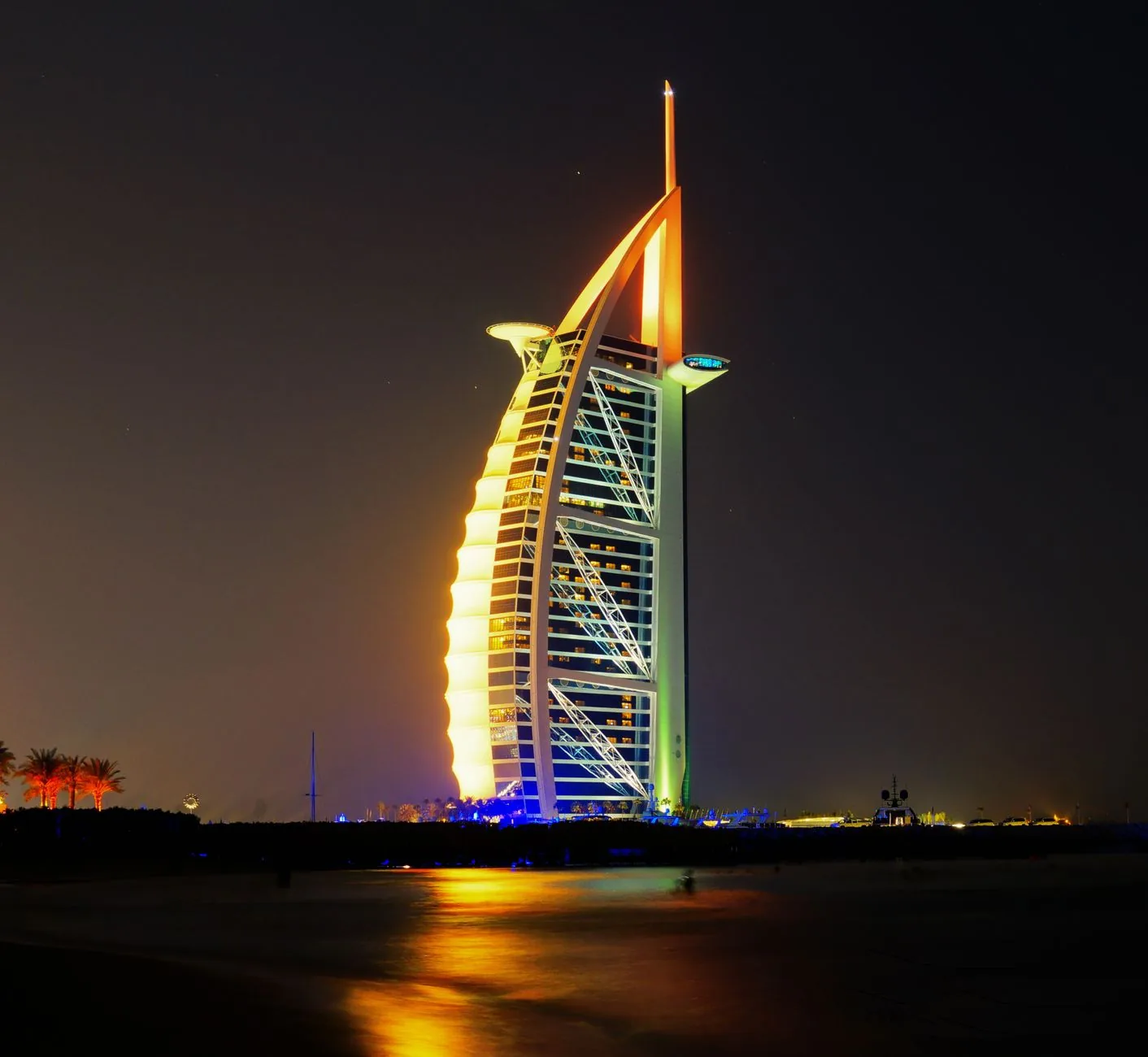
The sail-shaped Burj Al Arab is one of the defining landmarks of the Jumeirah coastline. You can see it from several nearby beaches, promenades and Madinat Jumeirah, while the surrounding waterfront provides strong views for photographs, particularly around sunset.
Visitors without a hotel reservation cannot assume unrestricted access to the property. Selected paid experiences, including Inside Burj Al Arab tours, dining and afternoon tea, provide access under specific booking conditions. These experiences are timed and commercially changeable, so check the current package, price, attire requirements and arrival instructions before booking.
For a less formal visit, combine a viewpoint around Umm Suqeim or Madinat Jumeirah with a meal. For a more structured experience, reserve one of the official visitor options in advance.
Walk beside the Dubai Water Canal
The Dubai Water Canal creates a waterfront route between Dubai Creek, Business Bay and the Arabian Gulf. Its pedestrian and cycling paths, bridges and skyline views make it a good choice for an early morning or sunset walk, when temperatures are more manageable.
The canal is in adjacent Al Safa and the wider Jumeirah area rather than being confined to the traditional Jumeirah neighborhood. It works particularly well as part of a half-day combining Jumeirah Beach Road, Al Wasl or Safa Park.
Occasional abra services operate in the wider canal area, including an RTA-listed Godolphin-Jumeirah round trip. Routes, fares and departure times can change, so check current transport information rather than relying on an old itinerary.
Consider Al Farooq Omar Bin Al Khattab Mosque
In nearby Al Safa, Al Farooq Omar Bin Al Khattab Mosque is known for architecture influenced by Ottoman and Andalusian styles. Scheduled tours may be available, but arrangements must be confirmed through the mosque before visiting. Check access times, booking requirements and dress rules in advance.
This is a useful option for travelers interested in Islamic architecture who have already visited Jumeirah Mosque, or who want to combine cultural sightseeing with the canal and Al Safa.
Choose a premium beach experience at J1 Beach
J1 Beach is a commercial beachfront dining and leisure destination on the Jumeirah coast, focused on upscale restaurants and beach-club experiences. It is not the same as a free public beach. Entry arrangements, reservations, minimum spends, age rules and seasonal operating hours vary by venue.
It suits travelers looking for a polished dining or beach-club experience rather than a simple swim. Confirm the individual venue’s policy before arriving, particularly if you are visiting as a family or planning to spend the evening there.
Local Food and Drink
Jumeirah has one of Dubai’s broadest dining mixes, from casual beach cafés to destination restaurants in luxury resorts.
For local flavor, look for Emirati dishes such as harees, thareed, machboos, luqaimat, dates and Arabic coffee. The Jumeirah Mosque cultural program includes light Emirati refreshments, while traditional and modern Emirati restaurants can be found across the wider city.
Souk Madinat Jumeirah offers international restaurants and cafés in an Arabian-style setting, with many venues overlooking waterways or the Burj Al Arab. Jumeirah Beach Road and nearby Al Wasl are better for independent cafés, contemporary dining and global cuisines.
Kite Beach and the coastal road provide casual food, coffee and snacks, while the resorts around Madinat Jumeirah, Burj Al Arab and J1 Beach offer more formal dining, afternoon tea and beach-club experiences. Reservations, dress codes and minimum spends vary by venue, particularly at premium properties.
Best Day Trips from Jumeirah
Downtown Dubai
Combine a Jumeirah beach morning with Burj Khalifa, Dubai Mall and the central boulevard area. Traffic can make journey times unpredictable, so allow flexibility around timed attraction bookings.
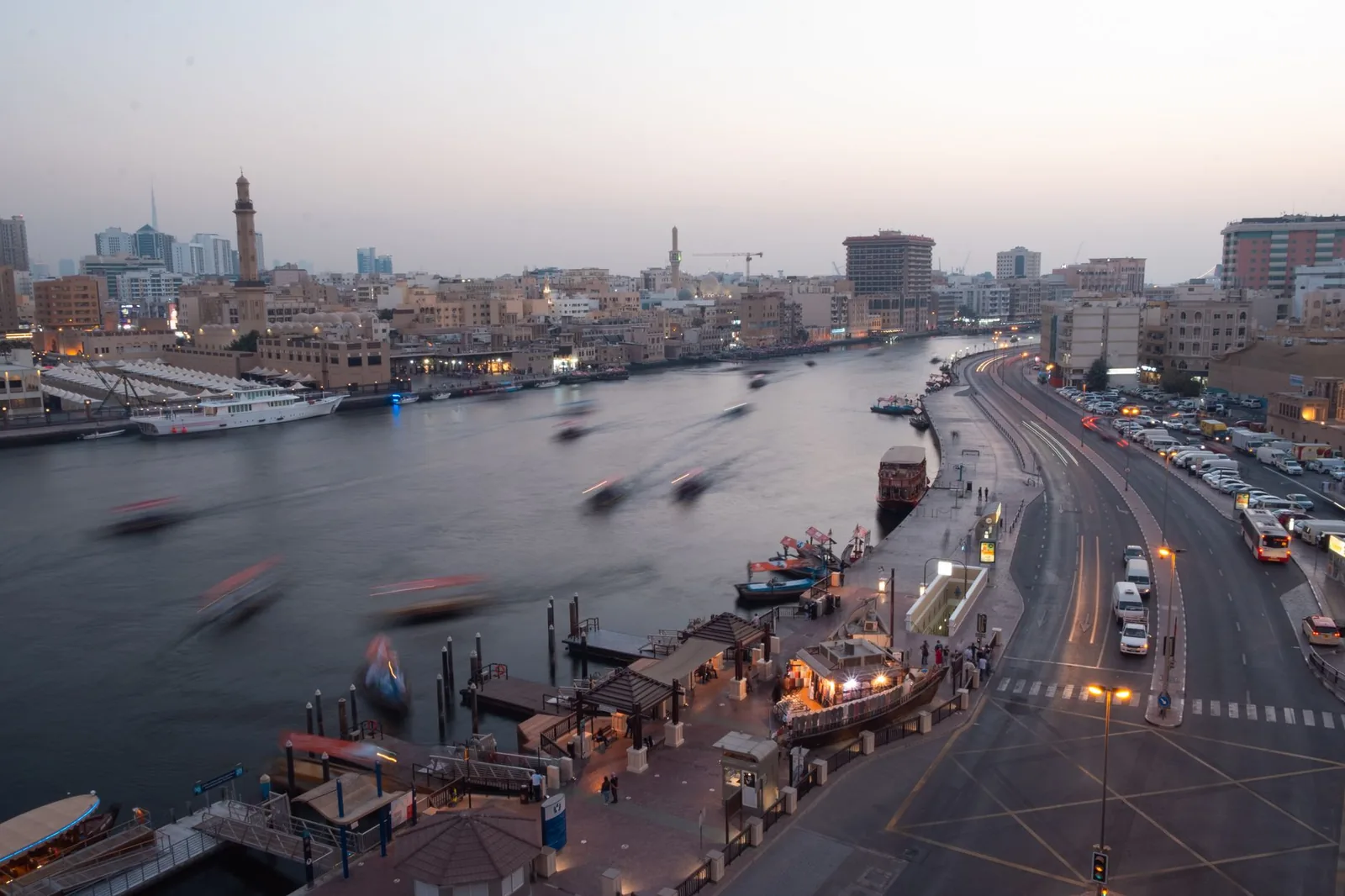
Old Dubai and Dubai Creek
Al Fahidi, the creek, traditional souks and abra crossings provide a completely different experience from the modern coast. Travel by taxi, metro or a combination of public-transport modes, checking the current route before departure.
Palm Jumeirah and Dubai Marina
The Palm’s hotels, beaches and viewpoints can be combined with an evening around Dubai Marina or JBR. The tram serves the wider coastal corridor and connects with the Palm Monorail, but check current stations, fares and connections.
Desert excursion
A desert safari adds dune landscapes, sunset scenery and evening cultural programming to a coastal stay. Operator inclusions, pickup arrangements, vehicle standards and cancellation policies vary considerably, so compare the details rather than choosing on name alone.
Abu Dhabi
A full-day intercity excursion can include Sheikh Zayed Grand Mosque, Louvre Abu Dhabi, Qasr Al Watan or Yas Island. Confirm attraction opening days and reservations before committing to a packed itinerary.
Hatta
Hatta is a longer trip into the Hajar Mountains, with kayaking, mountain scenery, heritage attractions and outdoor activities. Public-transport services and seasonal schedules should be checked before relying on them.
Essential Travel Tips
- Treat Jumeirah as a Dubai district, not a separate city.
- Check the exact neighborhood before booking accommodation or transport.
- Do not confuse Jumeirah with Palm Jumeirah or Jumeirah Beach Residence.
- Carry water, sun protection and breathable clothing throughout the year.
- Reserve Burj Al Arab experiences, resort dining and beach clubs in advance when possible.
- Swimwear is appropriate at beaches and pools, but dress more conservatively in streets, malls, mosques and heritage attractions.
- At Jumeirah Mosque, cover the shoulders, arms and legs; women should bring a head covering.
- Plan outdoor walks for early morning, late afternoon or the cooler season.
- Check current beach access, lifeguard arrangements and watersports availability.
- Verify Ramadan schedules, attraction hours, transport routes and venue policies before travel.
Common Questions About Jumeirah
Is Jumeirah a city?
No. Jumeirah is a coastal district or neighborhood area within Dubai, United Arab Emirates. Dubai is the city and emirate destination.
Is Jumeirah Beach free?
Jumeirah Open Beach is identified as a free public beach. Other beaches in the wider area may belong to hotels, beach clubs or commercial developments and can have different access rules.
Can non-Muslims visit Jumeirah Mosque?
Yes. The mosque’s public cultural program welcomes non-Muslim visitors. The official listing currently gives sessions at 10:00 and 14:00 from Saturday to Thursday, but confirm current times, admission and Ramadan arrangements before visiting.
How do I get from Dubai Airport to Jumeirah?
Take the Red Line from Terminal 1 or Terminal 3 and continue by taxi or bus, or use an official airport taxi directly. The best option depends on your hotel’s location, luggage, arrival time and traffic.
Does Jumeirah have a metro station?
There is no metro station directly serving all of the main Jumeirah neighborhood. Buses and taxis are generally more practical for Jumeirah Beach Road and the beaches, although metro and tram connections can be combined for some journeys.
What is the difference between Jumeirah and Palm Jumeirah?
Jumeirah is a mainland coastal neighborhood. Palm Jumeirah is a separate man-made island with its own hotels, beaches, restaurants and attractions.
Can visitors go inside the Burj Al Arab?
Visitors without a hotel reservation can access selected areas through paid experiences such as guided tours, dining or afternoon tea. Packages, prices, time slots and dress requirements vary.
What is the best time to visit Jumeirah?
October through April is generally the most comfortable period for beaches, walking and outdoor dining. From May through September, schedule outdoor activities for early morning or evening and use indoor attractions during the hottest hours.
Planning Your Jumeirah Trip
Jumeirah is one of the best parts of Dubai for travelers who want more than a skyline view. Its appeal lies in the combination: a public beach one day, a mosque or museum the next, followed by a canal walk, a souk dinner or a carefully chosen resort experience.
Plan by clusters rather than attempting to walk the entire district. Keep the beach, Jumeirah Mosque, Etihad Museum and Jumeirah Beach Road together; pair Madinat Jumeirah with Burj Al Arab views; and use taxis or buses for longer jumps. With that approach, Jumeirah offers a relaxed coastal base while keeping Dubai’s major attractions within easy reach.
Find your stay with VibrantGateways.
Choose your travel dates and explore accommodation options for your destination.
Join the conversation
Ask a question, share a travel tip, or help another traveler plan with confidence.
Leave a comment
No account required.