Coastal Charm: A Road-Trip Through Portugal’s Most Enchanting Seaside Villages
Portugal’s coastline threads together centuries-old fishing towns, wind-bent cliffs and beaches where Atlantic surf shapes daily life. A seaside road trip—whether starting north near Aveiro and moving south to the Algarve or the reverse—lets you trade motorways for coastal drives, salt-scented air and villages that still center on the harbor. These settlements are compact enough to explore on foot yet rich in texture: tiled façades, family-run seafood restaurants, modest museums and viewpoints that stop you mid-drive. This guide focuses on the most charming coastal villages that reward a slower pace: famous surf towns, sleepy harbors, cliff-top hamlets and salt marsh communities. Practical tips, seasonal advice and local experiences are included so you can plan an itinerary that balances iconic sights with authentic moments: morning markets, sunset beers by the waves and hidden coves for swimming or watching the light change over the Atlantic.
Must-See Attractions
Portugal’s coast is dotted with memorable sights—here are the ones you shouldn’t miss when following a seaside route.
- Ericeira: A UNESCO World Surfing Reserve with reef breaks, a compact historic core and a clifftop promenade offering views of surfers and fishing boats.
- Nazaré: The fishing neighborhood and Sítio viewpoint above the town, where you can see the enormous seasonal waves and the traditional red-white-blue painted boats on the sand.
- Peniche and Berlenga Islands: Peniche’s promontory is known for consistent surf; from here you can arrange boat trips to the wild Berlenga archipelago and its Fort of São João Baptista.
- Óbidos lagoon & Foz do Arelho: The lagoon offers calm waters for windsurfing and a contrasting landscape to the neighboring Atlantic beach.
- Aveiro and Costa Nova: Aveiro’s canals, moliceiro boats and the candy-striped houses of Costa Nova are maritime and photogenic—the town is often called the Portuguese Venice.
- Comporta and Carvalhal: Rice fields meet long, quiet beaches and pine-dotted sand dunes—Comporta’s understated luxury and natural scenery are the draw.
- Vila Nova de Milfontes and Zambujeira do Mar: In the Alentejo coast, these villages offer sheltered beaches, cliff-top viewpoints and a slower, rustic rhythm.
- Aljezur and Arrifana: A surf and nature hub on the Western Algarve with dramatic cliffs and an authentic village center.
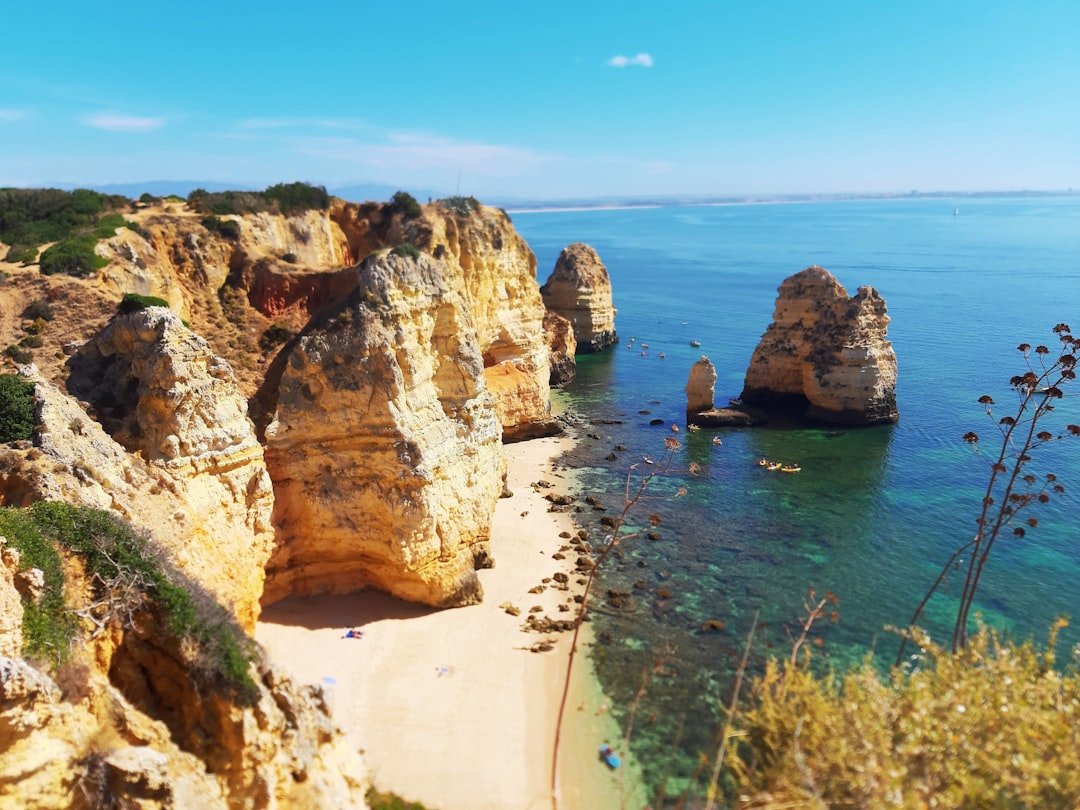
- Lagos and Ponta da Piedade: Not a village but a compact coastal town; Ponta da Piedade’s sea-carved grottos and towering cliffs are a must on any southern route.
- Carvoeiro, Ferragudo and Benagil: Small Algarve communities famed for intimate beaches, old fishing harbors and access to the Benagil sea cave by boat or kayak.
Best Time to Visit
Timing affects weather, sea conditions and crowds—choose months that match your priorities.
- Spring (April–June): One of the best windows—mild temperatures, blooming landscapes, and fewer tourists than midsummer. Water is cooler but swimable by late May in the south.
- Summer (July–August): Warm, dry and lively. Beaches and villages fill with domestic and international visitors. Book accommodations early if traveling in July–August.
- Autumn (September–October): Warm sea temperatures linger into September; October brings fewer crowds and vivid coastal light—ideal for photography and outdoor activities.
- Winter (November–March): Mild winters in the south, rainier in the north. Winter is excellent for storm-watching, surfing big waves (Nazaré’s season peaks in winter) and low-season hotel rates, but some small businesses may close.
- Crowds and recommendations: For a balance of good weather and lighter crowds aim for late May–early June or September. If surfing Nazaré’s giant waves, winter and early spring bring the most dramatic swells and professional competitions.
Essential Travel Tips
Practical advice to move smoothly from village to village and enjoy the local culture.
- Transportation: Renting a car gives the most flexibility for a coastal itinerary—many villages are linked by scenic national roads. If you prefer public transport, combine trains (Lisbon–Cascais or Lisbon–Setúbal lines) with regional buses; schedules can be limited for smaller villages.
- Money and payments: Cards are widely accepted in larger towns; bring some euros in cash for market stalls, small cafés and rural services.
- Safety: Portugal is generally safe. Use common-sense precautions: lock visible items in your car trunk, keep valuables secure, and be cautious on slick rocks and cliffs near the sea.
- Packing: Layers are essential—coastal weather can shift quickly. Bring beachwear, a windproof jacket, sturdy shoes for trails, and sun protection. If you plan to kayak or join boat trips, water shoes are useful.
- Local etiquette: Greet shopkeepers with a polite bom dia (good morning) and say obrigada/obrigado (thank you). Respect fishing gear and private-property signs on docks and cliffs.
- Driving tips: Coastal roads may be narrow and winding; watch for cyclists and pedestrians. Fuel stations can be spaced out on less populated stretches—top up in larger towns.
- Reservations: In high season, reserve accommodations and popular boat tours in advance. For dining, small tascas may not take bookings—arrive early for prime tables.
Frequently Asked Questions
How long should I plan for a coastal road trip through Portugal’s villages?
Allocate at least 7–10 days to travel comfortably between northern and southern sections while stopping in multiple villages. A 3–5 day trip can showcase a single region (e.g., Lisbon to Peniche and Nazaré, or the Alentejo and western Algarve).
Are these villages suitable for families with children?
Yes. Many villages have calm sheltered beaches, family-friendly restaurants and gentle walks. Check swimming conditions—some beaches have strong currents—and choose sheltered bays for younger children.
Can I surf if I’m a beginner?
Absolutely. Ericeira, Peniche and many Algarve beaches offer beginner lessons and surf schools with instructors and board rentals. For big-wave viewing (Nazaré), beginners should not attempt those conditions.
What transportation is best for visiting several villages?
Renting a car is the most flexible option for reaching small villages and hidden beaches. Train and bus networks cover larger towns but can be sparse for rural coastal stretches, so plan connections carefully if you avoid driving.
Are English and other languages widely spoken?
English is commonly spoken in tourist areas and by younger Portuguese. Learning a few basic Portuguese phrases is appreciated and helpful in smaller villages where English may be less common.
Conclusion
A coastal road trip through Portugal’s seaside villages rewards patience and curiosity: the best moments often arrive between destinations—a quiet harbor, a market stall selling fresh fish, or a clifftop view at golden hour. Whether you chase surf in Ericeira and Peniche, watch the giant waves of Nazaré, wander the colorful streets of Costa Nova, or follow the rugged Rota Vicentina down to the Algarve, each village offers a distinct slice of maritime life. Traveling slowly, sampling local dishes and taking time for short hikes and boat trips will reveal both Portugal’s popular highlights and quieter corners. With modest planning and an appetite for fresh seafood and salty air, this route becomes less a checklist and more a discovery of coastal rhythms that linger long after the trip ends.