Coastal Charms of Portugal: A Road-Trip Through the Country’s Best Seaside Villages
Portugal’s coastline is stitched with small towns where fishing traditions, dramatic cliffs and Atlantic surf converge. A seaside road trip lets you move at the pace of local life—stopping for coffee and custard tarts, stretching legs on rocky headlands, and tasting seafood pulled from the very ocean you’re watching. This guide traces a practical route through some of the country’s most charming coastal villages and small towns—from the surf-friendly beaches north of Lisbon to the rugged Costa Vicentina and the sun-drenched bays of the Algarve—highlighting what to see, where to eat, and how to travel smartly between favorites. Whether you have a long weekend or two weeks, these villages offer a balance of iconic viewpoints, authentic experiences and the relaxed rhythms that make Portugal such a singular coastal destination.
Must-See Attractions
Along a coastal road trip the highlights are a mix of natural viewpoints, historic harbors and beaches. Here are the essential stops and what makes each iconic:
- Ericeira: A World Surfing Reserve known for consistent right-hand breaks—check out Ribeira d’Ilhas beach and the cliffside promenade that looks back over old fishing boats and whitewashed houses.
- Cascais: The seaside town blends a sheltered bay, marina and promenades. Walk from the historic center to the Boca do Inferno cliff formation and the Fortaleza da Cidadela grounds for views of the Atlantic.
- Peniche & Baleal: Peniche’s fortress and working harbor are worth a stop; cross the footbridge to Baleal for broad surf beaches and popular surf schools.
- Nazaré: Famous for giant winter waves at Praia do Norte and a working fishing community. Ride the funicular up to Sítio for sweeping views and the Nossa Senhora da Nazaré sanctuary.
- Óbidos Lagoon & Foz do Arelho: Where calm lagoon waters meet the sea—ideal for windsurfing and kiteboarding, and for a quiet contrast to ocean beaches.
- Vila Nova de Milfontes: At the Mira River mouth on the Costa Vicentina, this town offers sandy beaches like Malhão and cliff walks along protected coastline.
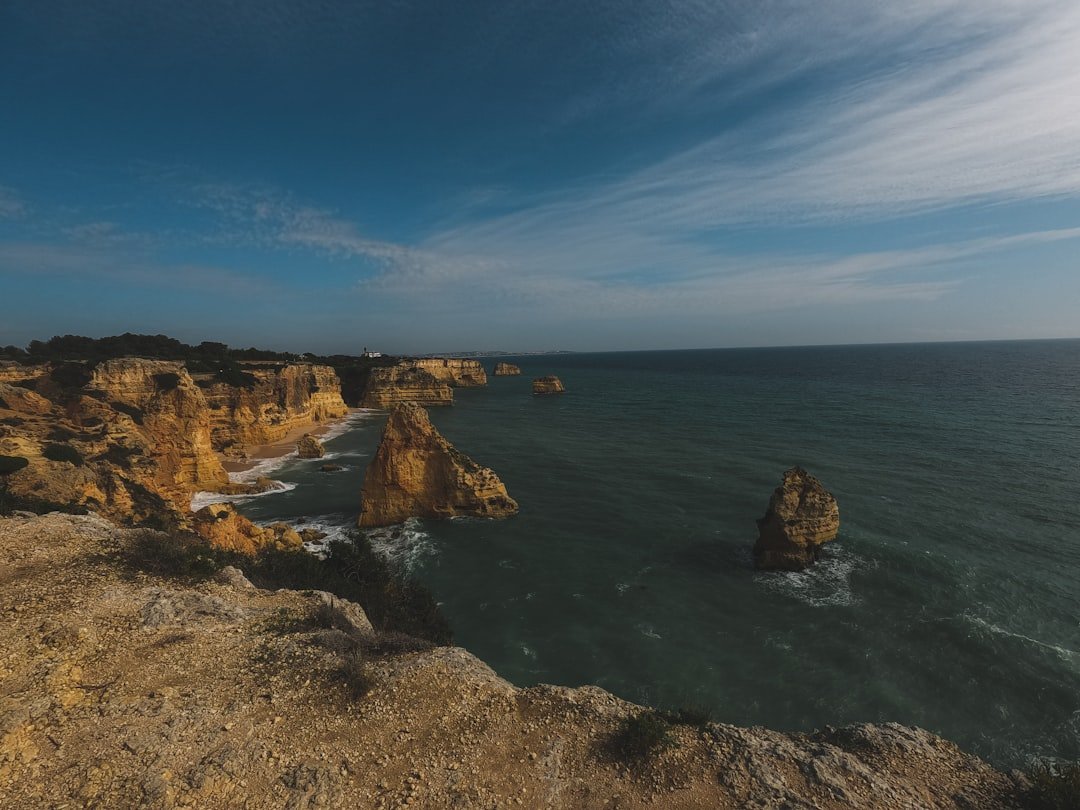
- Zambujeira do Mar and Odeceixe: Two of the most photogenic villages on the Costa Vicentina, both with access to cliffside trails and sheltered coves.
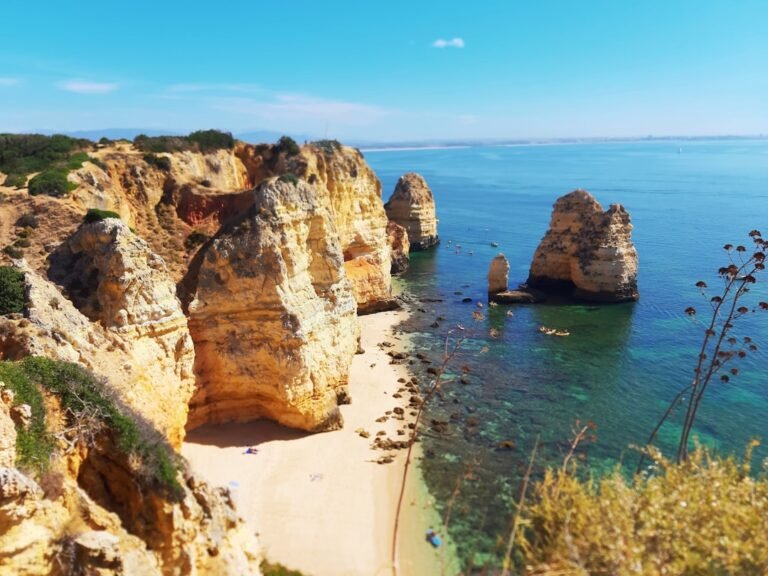
- Lagos: Known for striking rock formations—Ponta da Piedade’s sea-carved grottoes and Praia Dona Ana remain unforgettable.
- Tavira: An Algarve village with a historic center and access to Ilha de Tavira’s long sandy spit, reachable by ferry.
- Sagres: At the southwestern tip, the Fortaleza de Sagres and Cabo de São Vicente dramatic cliffs are classic Atlantic viewpoints with wind-swept panoramas.
Best Time to Visit
The optimal months depend on whether you prioritize warm swimming weather, surf conditions or fewer crowds.
- High season (June–August): Warmest water and sunniest days—ideal for beach time in the Algarve and boat trips. Expect busy towns and higher prices.
- Shoulder seasons (April–May, September–October): Arguably the best compromise: mild weather, fewer crowds, open businesses, and reliable surf in many spots. September still offers warm sea temperatures in the south.
- Winter (November–March): Cooler, wetter and much quieter. Big-wave season at Nazaré draws surfers and spectators. Some small businesses close for the season, but villages are peaceful and accommodation prices drop.
- Surf windows: For consistent surf, autumn and winter bring larger swells—Ericeira, Peniche and Nazaré see major waves—while summer is gentler and better for learning to surf.
Essential Travel Tips
Practical advice will keep your road trip smooth and safe.
- Transportation: Rent a car for flexibility—many villages are best reached by road. Roads are generally well maintained; be prepared for narrow lanes in historic centers. Parking can be tight in summer—arrive early or use public lots.
- Money and costs: Cards are widely accepted in larger towns, but carry some euros in cash for small cafés, markets and remote areas. ATMs are common but may be scarce on quieter stretches of Costa Vicentina.
- Safety: Portugal is one of Europe’s safer countries; still watch belongings in crowded areas. Respect ocean warnings—strong currents and rip tides are common; obey flag systems and local signage.
- Packing: Layers are essential—coastal winds can be chilly year-round. Bring sun protection, sturdy shoes for cliff paths, a light waterproof jacket and a swim layer. If you plan to surf, a spring suit works for much of the year except the coldest months.
- Local etiquette: Portuguese are polite and reserve formal greetings. Learn a few phrases—“obrigado/a” (thank you), “por favor” (please)—and use them. Dress is generally casual; when visiting churches, cover shoulders and knees.
- Connectivity and services: Mobile coverage is widespread but can be patchy in remote stretches of Costa Vicentina. Stock up on supplies before long drives; fuel up when you can, especially in the south where stations are spaced wider apart.
Frequently Asked Questions
How long should a coastal road trip in Portugal be to see the highlights?
A focused itinerary from Lisbon to the Algarve can be done in 5–7 days, hitting key stops like Ericeira, Peniche, Nazaré, the Costa Vicentina and Lagos. For a more relaxed pace and time to explore inland towns and additional beaches, plan 10–14 days.
Is it safe to swim at the beaches mentioned?
Many beaches are safe when lifeguarded and within flagged zones. However, Atlantic currents can be strong—always swim between the flags, heed lifeguard advice, and avoid unfamiliar beaches during high surf or rough conditions.
Can I do this route by public transport?
Yes, though public transport requires more planning. Trains and buses connect major towns (Cascais, Peniche via bus, Nazaré, Lagos), but smaller villages on the Costa Vicentina often need local buses or taxis. Renting a car is the most flexible option.
What regional dishes should I try along the coast?
Order grilled fish and mariscos (seafood platters), caldeirada (fish stew), arroz de marisco and regional shellfish like clams and percebes where available. Don’t miss local pastries—pastéis de nata—and Algarve sweets made with almonds and fig compotes.
Are the beaches dog-friendly?
Rules vary by municipality and season. Many beaches allow dogs in low season but restrict them in summer months. Check local signage and, when in doubt, ask at the town hall (Câmara Municipal) or local businesses.
Conclusion
A coastal road trip through Portugal’s villages is an invitation to slow travel: each harbor, cliff path and fish market offers a distinct sense of place shaped by the Atlantic. From the world-class waves of Ericeira and Nazaré to the mellow lagoons and sheltered bays of the south, you’ll find a blend of outdoor adventure, culinary reward and quiet moments watching the ocean. Plan your route to leave room for unplanned detours—some of the best discoveries are the small coves and seaside cafés you weren’t expecting to find. With sensible planning and a curiosity for local life, this route reveals why Portugal’s coast remains one of Europe’s most rewarding drives.