
Namib Desert Travel Guide
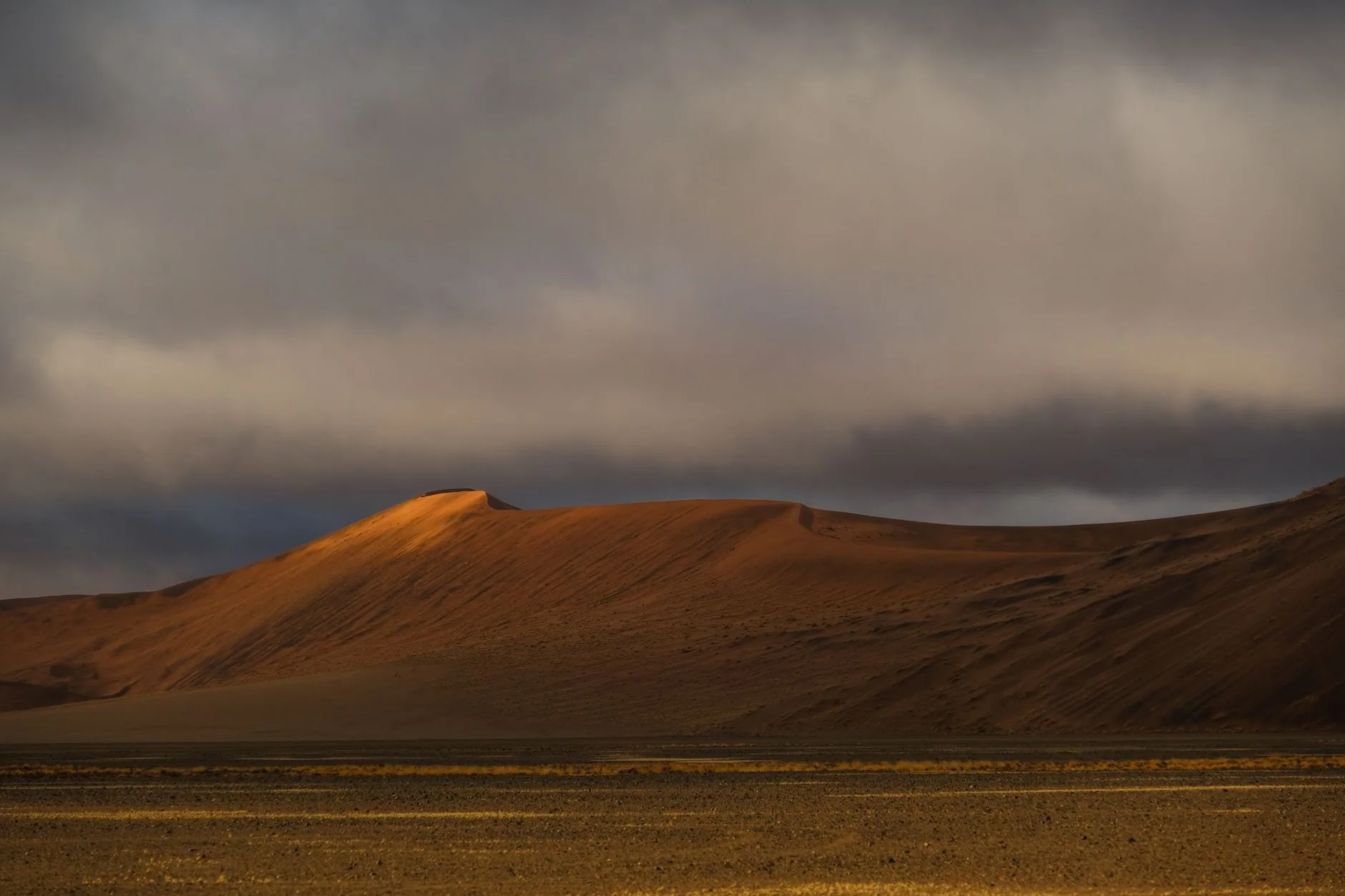
The Namib Desert is not a single town or compact attraction. It is a huge coastal desert region in Namibia, encompassing the famous dunes and clay pans around Sesriem, the Namib Sand Sea, remote conservation areas, mountain landscapes and the Atlantic coast near Swakopmund and Walvis Bay.
For many travelers, the main reason to come is Sossusvlei: a landscape of rust-orange dunes, white clay, blackened camel-thorn trees and extraordinary early-morning light. But the wider Namib offers much more. You can drive across gravel plains, look for ancient Welwitschia plants, explore the Naukluft Mountains, fly over the dune sea, take a 4×4 to Sandwich Harbour or stay in a private reserve with some of southern Africa’s darkest skies.
The region rewards careful planning. Distances are long, services are limited and several of the most memorable experiences require an early start, a capable vehicle or a specialist guide. Allow at least three nights for the Sesriem and Sossusvlei area, and five to eight nights if you want to combine the southern dunes with NamibRand and the central coastal desert.
Why Namib Desert Is Worth Visiting
The Namib is one of the world’s great landscape destinations. Its appeal lies in contrast: immense dunes beside pale salt pans, bare gravel plains next to rugged mountains, and a foggy Atlantic coastline that can feel entirely different from the hot interior.
The southern visitor area, centered on Sesriem and Sossusvlei, is the classic introduction. Here, high dunes create changing patterns of light and shadow throughout the day. Deadvlei’s stark trees and pale pan are especially striking, while the climb up Big Daddy provides a demanding but memorable view across the surrounding desert.
The Namib Sand Sea is also a UNESCO World Heritage landscape. It is a coastal fog desert containing shifting dunes, gravel plains, playas, ephemeral rivers and highly adapted plants and animals. Fog from the Atlantic is an important source of moisture for parts of this ecosystem, helping explain how life persists in such an apparently barren environment.
The region suits travelers who enjoy open spaces, photography, self-drive routes, guided walks and unusual wildlife experiences. NamibRand adds private-conservation landscapes, lodge-based activities and very dark skies. The coastal gateways bring a different set of experiences, including dune drives, marine excursions, seafood and access to Sandwich Harbour.
This is not the easiest destination for an improvised trip. The rewards are greatest when you plan fuel, accommodation, park access and driving distances in advance.
Top Experiences in Namib Desert
Planning your activities? Compare tours and activities for Namib Desert on BookingTabs.
Visit Sossusvlei and Deadvlei
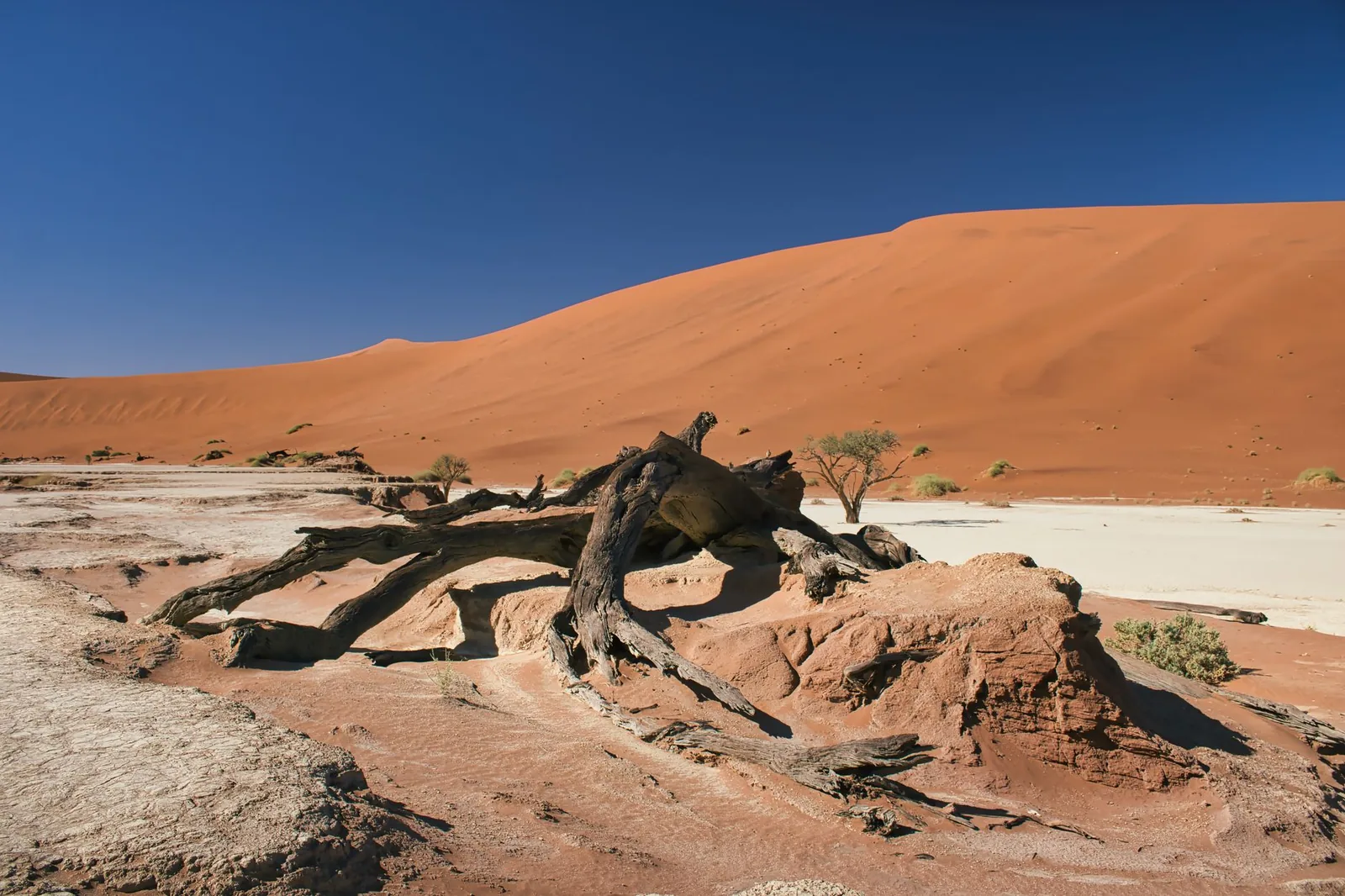
Sossusvlei is the Namib Desert’s best-known landscape: a clay-and-salt pan surrounded by enormous orange dunes. It is part of the wider park area reached through the Sesriem entrance, followed by a long internal drive across the dune corridor.
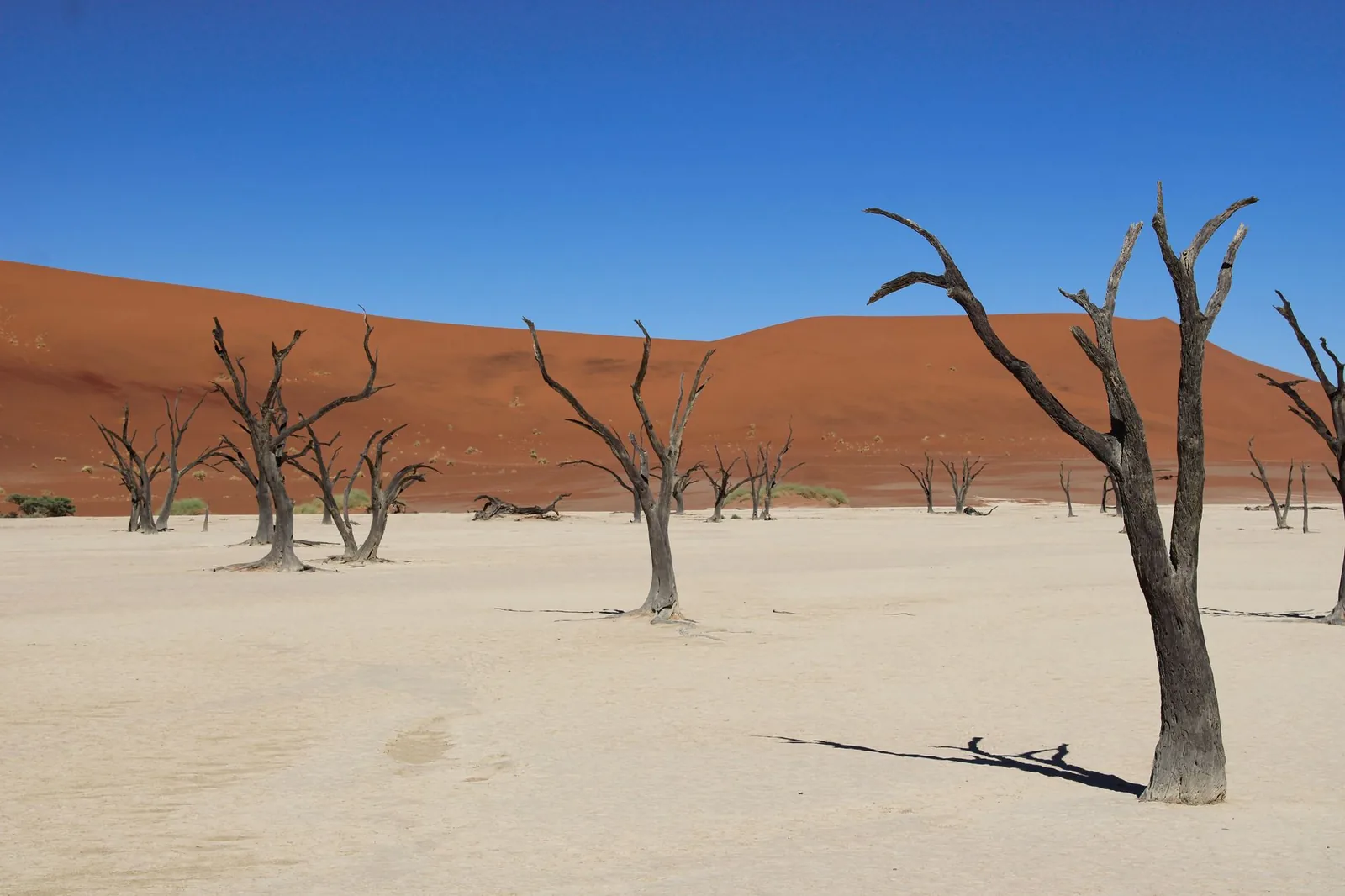
Deadvlei lies nearby and is visually distinct. Its white clay floor and dark, dead camel-thorn trees create one of Namibia’s most recognizable scenes. The trees have been preserved by the dry conditions, but they are fragile. Do not climb on, touch or lean against them.
The final section toward the pans involves soft sand and has 4×4 access considerations. Travelers in a 2WD vehicle generally need to use the relevant shuttle arrangement or join a guided transfer. Shuttle departure points and operating procedures can change, so check the current details before setting out.
Plan to arrive as early as practical. Sunrise brings cooler temperatures, softer light and fewer problems with heat. Carry water even if you are visiting only the main viewpoints; the walk across sand to Deadvlei is more strenuous than it first appears.
Climb Big Daddy Dune
Big Daddy is one of the major dunes near Deadvlei and a signature challenge in the Sossusvlei area. The climb is physically demanding because every step through loose sand gives way slightly, and there is little shade or protection from the sun.
You do not need to reach the highest point to enjoy the experience. Even a partial ascent gives broad views over the pan, neighboring dunes and the unusual contrast between white clay and red sand. Start early, take more water than you think you need and allow plenty of time for the descent.
A dune climb is not simply a short walk measured by distance. Heat, wind and soft surfaces make it considerably more tiring than a similar walk on firm ground.
Walk Dune 45
Dune 45 is a highly accessible landmark on the route toward Sossusvlei and one of the area’s most popular photography stops. Its shape and position make it a practical place to experience the scale of the dunes without committing to the longer climb at Big Daddy.
Sunrise and sunset can produce excellent light, although the best time depends on park access arrangements and your route for the day. If sunrise photography matters, plan conservatively and check current entry procedures. The dunes can become busy at popular times, so a quieter composition may require patience rather than a different viewpoint.
Explore Sesriem Canyon
Sesriem Canyon is close to the park gateway and offers a useful change of pace after a day among the dunes. Episodic water flow has carved a narrow gorge into the rock, creating shaded sections and uneven walking surfaces. The canyon is approximately one kilometre long and reaches around 30 to 40 metres deep in places.
Because it is near Sesriem facilities, the canyon can fit into an arrival or departure day more easily than the distant pans. Conditions may change after rain, and sturdy footwear is sensible. It is also a good option for travelers who want a shorter walk rather than another exposed dune climb.
Experience the Namib Sand Sea
The Namib Sand Sea is a large protected landscape, not a single attraction with one viewpoint. Its importance lies in the combination of active and ancient dunes, gravel plains, coastal flats, inselbergs, ephemeral rivers and specialized desert life.
Visitor access is concentrated at designated points and managed areas. You should not assume that every part of the UNESCO property is freely accessible or suitable for independent driving. A guided excursion, lodge activity or established route is often the best way to understand the landscape without damaging delicate surfaces.
Stay in NamibRand
NamibRand Nature Reserve offers a more lodge-based and private-conservation experience than the main Sossusvlei circuit. Activities may include guided desert drives, nature walks, wildlife observation, hot-air ballooning and stargazing.
The reserve is also known for exceptionally dark skies and is recognized as an International Dark Sky Reserve. On a clear night, the absence of urban light makes the stars a central part of the experience rather than a brief bonus after dinner.
Access rules vary by property and some areas are not intended for unrestricted self-driving. Arrange activities through your lodge or an authorized operator, particularly if you want to walk away from the immediate accommodation area.
Explore the Naukluft Mountains
The Naukluft section of Namib-Naukluft Park provides a marked contrast to the open dune fields. Rocky scenery, mountain trails, canyons, wildlife and birdwatching create a more varied environment for travelers who enjoy hiking.
Naukluft is a separate area from the main Sossusvlei route, so it should be treated as its own stop rather than a quick detour. Trail availability, permits, weather and accommodation arrangements should be confirmed before arrival. The terrain can be uneven, and hiking in warm conditions requires sensible pacing and adequate water.
See the Welwitschia Plains and Moon Landscape
The central Namib around the Welwitschia Plains and Moon Landscape is starkly different from the orange dunes. Gravel plains, eroded formations and ancient Welwitschia mirabilis plants dominate the scenery.
The Welwitschia is one of the region’s most distinctive plants, adapted to survive in an environment with little conventional rainfall. A drive through this landscape is often combined with the Moon Landscape on an excursion from Swakopmund.
Permits and route requirements can apply. Confirm current arrangements before departure, and remain on designated roads or tracks. Gravel plains and lichen fields can look empty while being ecologically sensitive.
Take a 4×4 trip to Sandwich Harbour
Sandwich Harbour is one of the most dramatic places in the coastal Namib, where dunes meet the Atlantic and lagoons and beaches form a constantly changing edge between desert and sea.
The route involves difficult sand driving and is normally visited with an experienced 4×4 operator. It is not an appropriate place to test an unfamiliar rental vehicle or attempt an unsupported excursion. Permits and access rules apply, and conditions can be affected by tides, wind and sand movement.
Most trips depart from the Walvis Bay or Swakopmund area. A full-day outing can combine demanding driving with broad coastal views, but the itinerary depends on the operator, weather and current access conditions.
Fly over the desert
A scenic flight reveals the scale and geometry of the Namib in a way that is difficult to appreciate from the ground. From above, dunes, dry river courses, gravel plains and the coastline form patterns that disappear at road level.
Flights operate from several tourism centers, including the Sossusvlei and Swakopmund areas. Aircraft, schedules, prices and cancellation policies vary. Wind and other weather conditions can affect departures, so leave flexibility in your itinerary if an aerial experience is a priority.
Hot-air ballooning is another memorable option in suitable parts of the southern desert and NamibRand. It is weather-dependent and usually arranged through a lodge or specialist operator.
Best Day Trips from Namib Desert
Sossusvlei and Deadvlei from Sesriem
This is the essential full-day outing from a Sesriem base. Start early and combine the dune corridor with the pans and the Deadvlei walk. Add Big Daddy only if you have the fitness, water and time for a demanding climb.
Sesriem Canyon and Elim Dune
These nearby sights work well on an arrival or departure day, or when you want a less strenuous desert itinerary. They provide canyon scenery and dune views without repeating the longest internal drive to the pans.
Sandwich Harbour from Swakopmund or Walvis Bay
A guided 4×4 trip crosses demanding coastal dunes before reaching the Atlantic edge. Choose an experienced operator and confirm permit arrangements, vehicle type, route conditions and what food or water is supplied.
Welwitschia Plains and Moon Landscape
This central-Namib circuit focuses on ancient plants, gravel plains and heavily eroded scenery. It is one of the best ways to see how varied the desert can be beyond the red dunes. Permit requirements and current road access should be checked before departure.
NamibRand guided excursion
A guided drive or walk in NamibRand offers a quieter, lodge-based alternative to the main Sossusvlei circuit. Activities may include wildlife viewing, desert ecology, photography and stargazing, depending on the reserve and accommodation.
Naukluft hiking day
Travelers based in or near the mountain section can choose a hiking day rather than another dune excursion. Confirm trail availability, permits, weather and water requirements before setting out.
Which Namib Desert experience would you most want to build your trip around?
Local Food and Drink
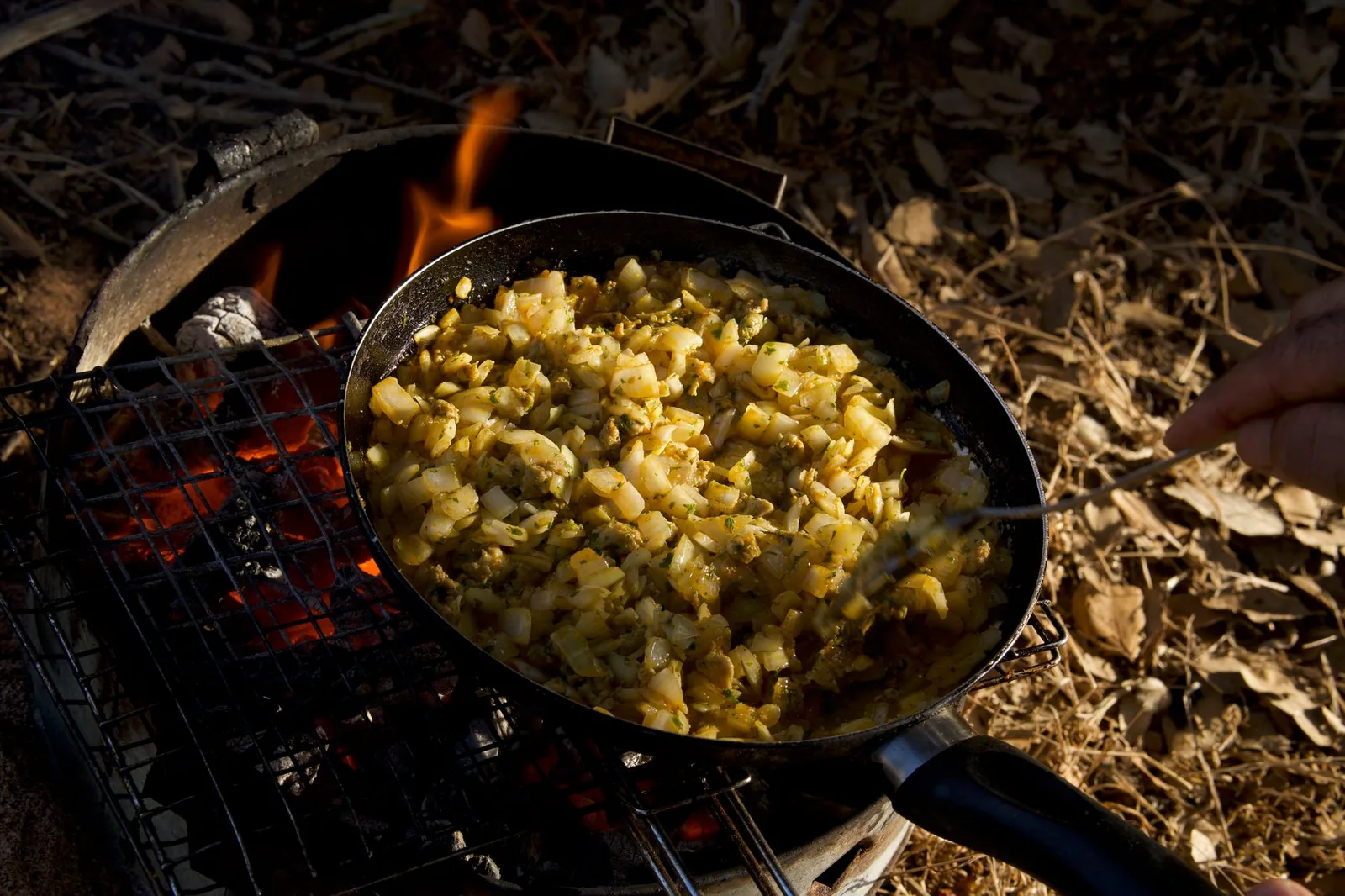
Remote lodges and camps commonly provide meals through an on-site restaurant or a set meal plan. Inclusions and dietary options vary, so confirm them directly before arrival. Shops and fuel facilities are widely spaced, and attraction areas should not be treated as places to buy a complete meal.
Namibian braai-style grilled meat is common at lodges and restaurants. Game meats such as oryx and springbok may appear on menus, while potjiekos and other slow-cooked southern African dishes are also found at some properties.
Swakopmund and Walvis Bay offer the best opportunities for Atlantic seafood, including fish and oysters. They are also useful places to restock snacks and drinking water before a remote desert excursion.
Carry personal water and food for long drives, even when meals are included at your accommodation. Heat, distance and an unexpected delay can quickly make a modest supply feel inadequate.
Where to Base Yourself in Namib Desert
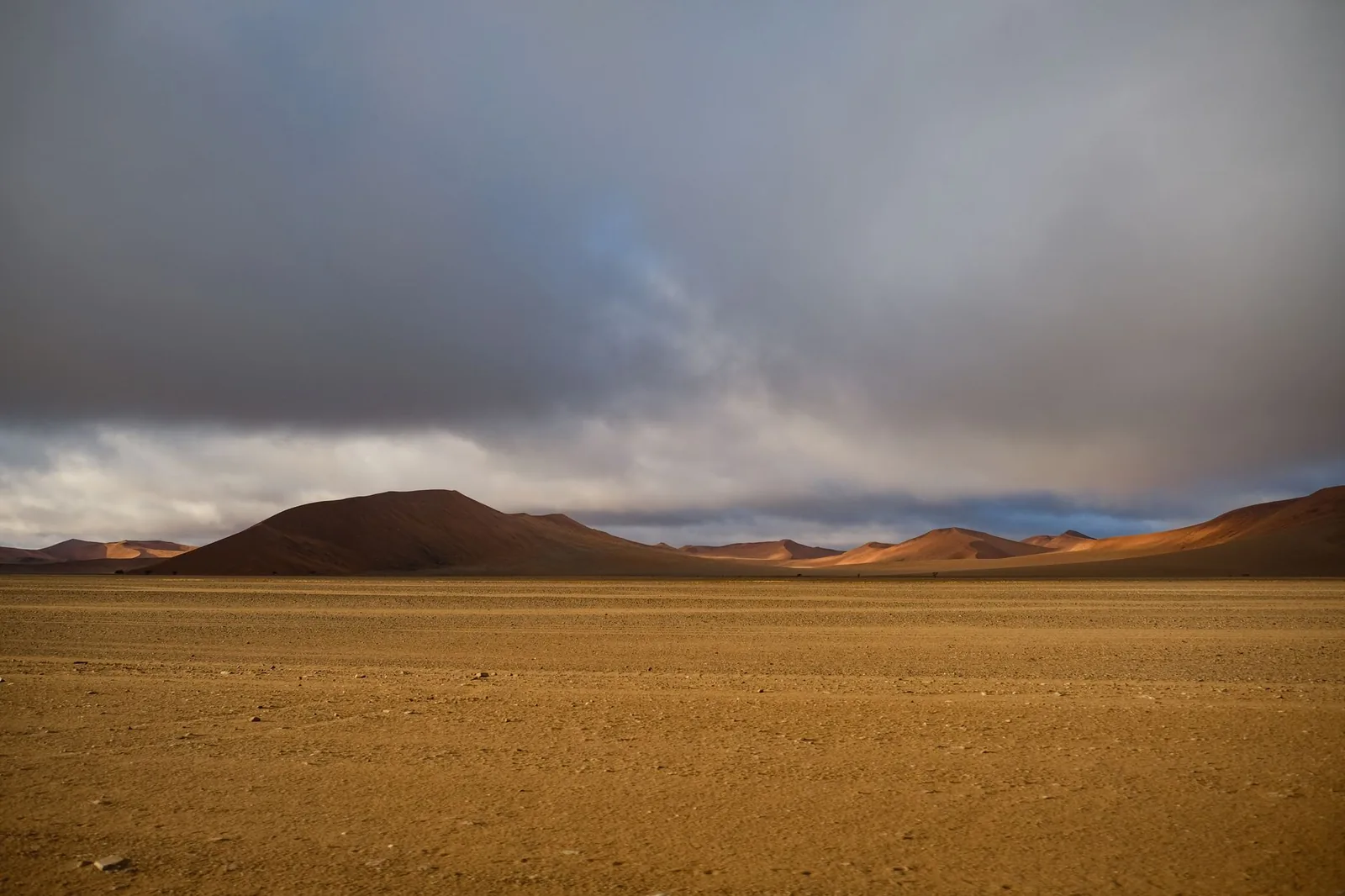
Sesriem and Sossusvlei
Sesriem is the most practical base for Sossusvlei, Deadvlei, Big Daddy, Dune 45 and Sesriem Canyon. Accommodation ranges from campsites and park facilities to lodges in the surrounding area.
Staying inside or close to the park can make early entry more manageable and reduce the pressure of a long drive before sunrise. Demand is high during popular travel periods, so reserve well ahead. Check whether meals, transfers and park access arrangements are included in your chosen stay.
NamibRand and the greater Sossusvlei landscape
Private reserves south of Sesriem suit travelers looking for guided desert experiences, lodge comfort, walking, wildlife and stargazing. The atmosphere is generally more private and activity-led than a self-drive visit to the main park viewpoints.
Most activities are arranged through the lodge, and self-drive access may be restricted in parts of the reserve. Confirm transfer requirements and included activities before booking.
Naukluft
Naukluft is a useful base for mountain scenery, hiking and nature walks. It is not the closest choice for a quick Sossusvlei visit, but it works well for travelers building a broader Namib-Naukluft itinerary.
Check trail conditions, permits and accommodation availability in advance, particularly if hiking is central to your plans.
Swakopmund
Swakopmund is the principal coastal base for exploring the central Namib. It offers a broader choice of restaurants, services and activity operators than the remote desert settlements.
From here, travelers can arrange excursions to Sandwich Harbour, the Welwitschia Plains and Moon Landscape, as well as dune activities, scenic flights and coastal experiences. It is also a comfortable stop between southern Namibia and the northern coast.
Walvis Bay
Walvis Bay is especially convenient for Sandwich Harbour and marine-oriented excursions. It has airport access and a substantial service base, making it useful for travelers who prefer to begin or end a coastal itinerary there.
The town and Swakopmund are close enough to serve similar central-Namib itineraries, but your choice should reflect your planned activities and transport arrangements.
When to Visit Namib Desert
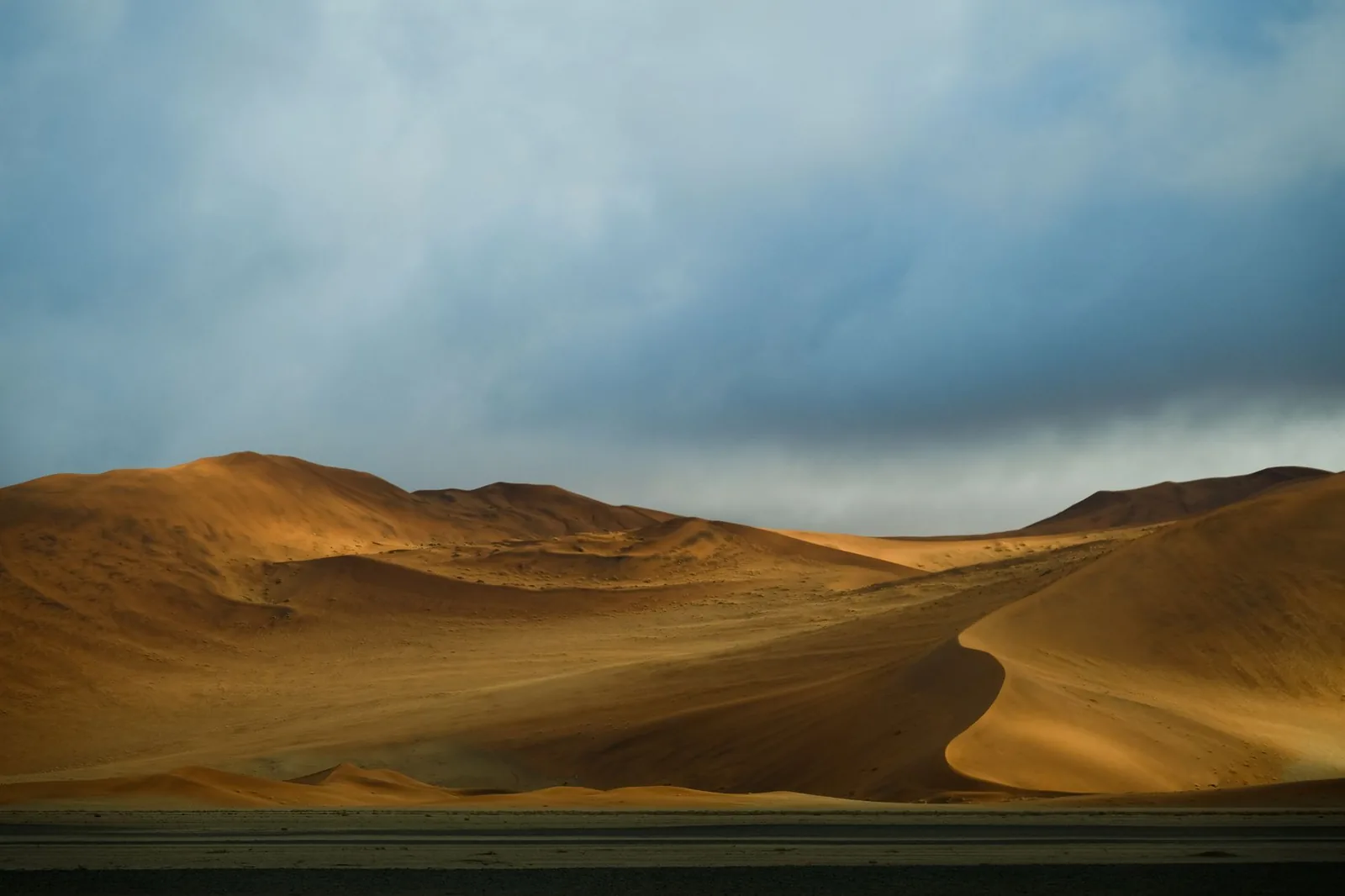
For the inland desert and Sossusvlei, May to October is generally the most comfortable period for daytime sightseeing. Conditions are often dry, skies can be clear and daytime temperatures are more manageable than in summer. The trade-off is cold: winter pre-dawn temperatures can approach freezing in some inland locations.
September and October are particularly appealing for photography and outdoor activities, although daytime heat increases as summer approaches. Wind can affect ballooning, scenic flights and sand conditions.
From December to February, days can be very hot, especially around the inland dunes. Occasional thunderstorms or localized rain are possible, although the desert may remain dry even when other parts of Namibia receive rain. Schedule major walks and dune visits for the early morning.
March to May brings gradually more moderate temperatures after summer. Rainfall remains variable and localized, while nights become progressively cooler.
The Atlantic coast behaves differently from the inland desert. Coastal fog is more characteristic around the Namib’s western edge, and Swakopmund or Walvis Bay can feel cool even when the interior is hot. Pack for both environments.
How to Get Around Namib Desert
The Namib Desert has no single public-transport network linking its attractions. Most visitors use a rental car, guided safari vehicle, lodge transfer, specialist 4×4 excursion or charter or scenic flight.
A rental vehicle is useful for a self-drive itinerary, but expect long gravel-road sections, sparse services, fuel planning and limited assistance. A suitable 4×4 is needed for some sandy tracks and remote routes. Before departure, check the vehicle’s road permissions, spare tires, recovery arrangements and insurance terms.
A 2WD vehicle may reach the main Sossusvlei access area, but the sandy final section toward the pans has separate 4×4 considerations. Shuttle arrangements have changed in the past, so verify the current departure point, tickets and operating rules before travel.
There are no dependable taxis or rideshare services for remote attractions. Intercity shuttles may connect larger towns, but onward travel to parks and lodges normally requires a prearranged transfer, rental car or tour.
From overseas, Hosea Kutako International Airport near Windhoek is the main arrival point for many Namibia itineraries. Walvis Bay International Airport is more convenient for the central coast, Swakopmund and Sandwich Harbour. There is no ordinary scheduled passenger airport at Sesriem or Sossusvlei. Travelers usually continue by road, lodge transfer, guided vehicle or charter aircraft.
From Windhoek to Sesriem, the journey takes several hours and the exact duration depends on road conditions, stops and vehicle type. Do not plan a tightly timed connection after an international arrival.
Download offline maps, leave your route with your accommodation and avoid unnecessary night driving. Mobile coverage can be inconsistent, and a breakdown in the desert is a much more serious problem than a delay in town.
Practical Tips for Visiting Namib Desert
- Plan Sossusvlei and Deadvlei around sunrise, when temperatures are lower and light is often most dramatic.
- Carry more water than you expect to need, particularly for dune walks and independent driving.
- Pack warm layers for winter mornings and evenings, as well as sun protection for the daytime.
- Check tires, spare tires, fuel range and recovery arrangements before remote driving.
- Refuel whenever a reliable opportunity appears; do not assume remote camps have fuel.
- Download offline maps and leave your itinerary with your accommodation or a trusted contact.
- Confirm current park fees, permits, gate procedures and access rules with the relevant authority or reserve.
- Stay on designated tracks and never drive over vegetation, lichens, pans or fragile desert surfaces.
- Do not touch or climb on the preserved trees at Deadvlei.
- Use an authorized guide for Sandwich Harbour, remote 4×4 routes and specialist activities.
- Book Sesriem accommodation early during high-demand periods.
- Carry payment alternatives because card facilities and connectivity are not consistent throughout the region.
- Check road and weather conditions before setting out, particularly after unusual rainfall or during strong winds.
- Allow flexibility for scenic flights and ballooning, which can be cancelled or delayed by weather.
- Avoid driving after dark on unfamiliar gravel roads.
Park fees, permits, shuttle arrangements, accommodation rates, road conditions and activity schedules can change. Verify current details before departure rather than relying on older guidebooks or online comments.
Namib Desert Travel FAQ
What is the best base for visiting the Namib Desert?
Sesriem is the most practical base for Sossusvlei, Deadvlei, Dune 45, Big Daddy and Sesriem Canyon. Swakopmund or Walvis Bay are better for the central coastal Namib, Sandwich Harbour, the Welwitschia Plains and Moon Landscape.
How many days do you need in the Namib Desert?
Three nights is a sensible minimum for the Sesriem and Sossusvlei area. Five to eight nights allows a broader itinerary including NamibRand, Swakopmund, Walvis Bay and central-Namib excursions.
Can you visit Sossusvlei without a 4×4?
A 2WD vehicle can reach the main access and designated parking area, but the sandy final section toward Sossusvlei and Deadvlei has 4×4 access considerations. Travelers without a suitable vehicle should use the current shuttle arrangement or a guided transfer. Confirm the departure point and ticket details before traveling.
Do you need a permit for the Namib Desert?
Park entry permits and conservation fees apply in designated national parks. Specific areas, including Welwitschia Drive and Sandwich Harbour, may require additional permits or advance arrangements. Current fees and procedures should be checked with the relevant park authority or operator.
Is the Namib Desert safe for self-driving?
Self-driving is feasible on established routes for well-prepared travelers, but remoteness, gravel roads, soft sand, heat, tire damage, limited services and weak connectivity create real risks. Use an appropriate vehicle, carry supplies, avoid unnecessary night driving and arrange recovery support for remote routes.
When is the best time to see Sossusvlei?
May to October is commonly preferred for cooler daytime conditions and generally dry weather. Winter mornings can be extremely cold, while September and October bring strong photography conditions but increasing heat. Check weather, wind and road conditions close to travel.
Can you see wildlife in the Namib Desert?
Yes. Species recorded in Namib-Naukluft include oryx, Hartmann’s zebra, springbok, giraffe, brown hyena, leopard, baboon and many bird species. Wildlife is adapted to sparse desert conditions, however, and sightings are never guaranteed.
Is the Namib Desert suitable for families?
It can suit families comfortable with long drives, heat, early starts and limited services. Sesriem Canyon may be easier than a dune climb, while Big Daddy, Deadvlei and remote 4×4 excursions require careful consideration of children’s age, fitness and heat tolerance.
Planning Your Namib Desert Trip
The Namib Desert is best understood as a region of distinct landscapes rather than a single sightseeing stop. The Sossusvlei area provides the iconic dunes and pans, NamibRand brings guided conservation and dark-sky experiences, Naukluft adds mountains and hiking, and the central coast opens onto fog, gravel plains, marine scenery and Sandwich Harbour.
Give the region time. Start early, plan your fuel and water, allow for slow gravel roads and confirm access details before you travel. With that preparation, the Namib becomes more than a collection of famous photographs: it is a vast, quiet landscape where every change in light reveals a different desert.
Inspired? Start planning your trip.
Move from inspiration to planning with BookingTabs — explore hotels, tours and travel options in one place.

Join the conversation
Ask a question, share a travel tip, or help another traveler plan with confidence.
Leave a comment
No account or email required.