
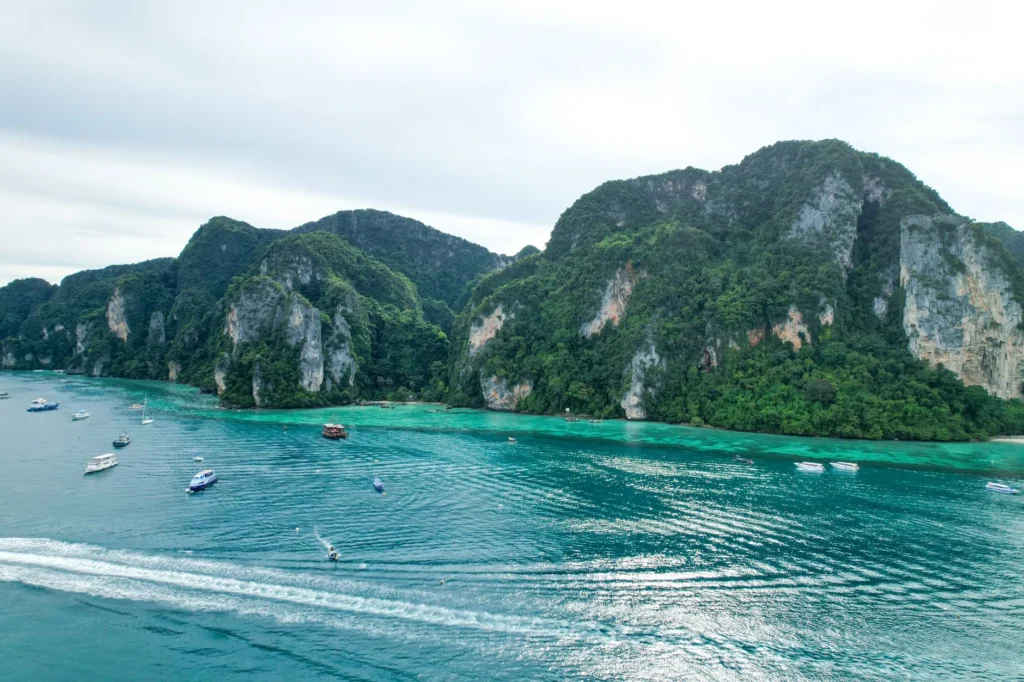
The Phi Phi Islands are one of Thailand’s most recognisable island groups, known for sheer limestone cliffs, bright Andaman Sea water and compact tropical beaches. They sit in Krabi Province within Hat Noppharat Thara–Mu Ko Phi Phi National Park, between Phuket and the Krabi coast.
Phi Phi is an archipelago rather than a single resort island. Ko Phi Phi Don is the inhabited centre and the place to stay, eat, arrange excursions and watch the sunset. Ko Phi Phi Le, its uninhabited neighbour, is visited by boat for Maya Bay, Pileh Lagoon, Loh Samah Bay and Viking Cave. Smaller islands such as Bamboo Island, Yung Island, Bida Nok and Bida Nai add more options for swimming, snorkelling and diving.
Two or three nights is a useful amount of time for most visitors. A day trip can cover the headline sights, but an overnight stay gives you more flexibility, a chance to visit the viewpoint and beaches at a quieter time, and some protection against weather-related boat disruption.
What Makes Phi Phi Islands Special
The main appeal is the scenery. Tall limestone formations rise directly from the sea, creating enclosed bays and dramatic approaches by boat. The landscape is especially striking around Phi Phi Le, where steep cliffs surround Maya Bay and Pileh Lagoon.
Phi Phi also works well in a wider Andaman itinerary. You can reach the islands by passenger ferry or speedboat from Phuket, Krabi or Ao Nang, then continue towards Railay, Koh Lanta or another coastal base. There is no airport on the islands, so the journey is part of the experience and needs a little planning.
The atmosphere varies considerably across Phi Phi Don. Tonsai Village and Loh Dalum are busy, social and nightlife-focused, with plenty of casual restaurants, bars, shops and tour agencies. Long Beach is more relaxed, while Loh Ba Kao and Laem Tong suit travellers who prefer resort surroundings and distance from the central crowds.
Phi Phi is particularly well suited to beach holidays, island-hopping, snorkelling, scuba diving, couples and first-time visitors to Thailand’s Andaman coast. Families can enjoy it too, especially if they choose accommodation away from the nightlife and plan boat trips around children’s ages, sea conditions and rest time.
Top Experiences in Phi Phi Islands
See Maya Bay responsibly
Maya Bay is the best-known sight in the Phi Phi Islands and the location associated with the film The Beach. The crescent-shaped beach is enclosed by high limestone cliffs and is usually included in boat excursions from Phi Phi Don, Phuket and Krabi.
Current visitor-management rules are important. Boats normally approach via Loh Samah Bay rather than entering Maya Bay itself. Visitors walk from the landing area to the beach, and swimming in Maya Bay is prohibited. The bay and nearby protected areas normally close from August 1 through September 30 each year for environmental recovery and visitor safety, although you should confirm the official dates and access arrangements for the year of travel.
Daily procedures, visitor limits, park fees and access rules can change. Check the latest information before booking, and do not assume that an older tour description or photograph reflects current conditions.
Take a boat trip around Phi Phi Le
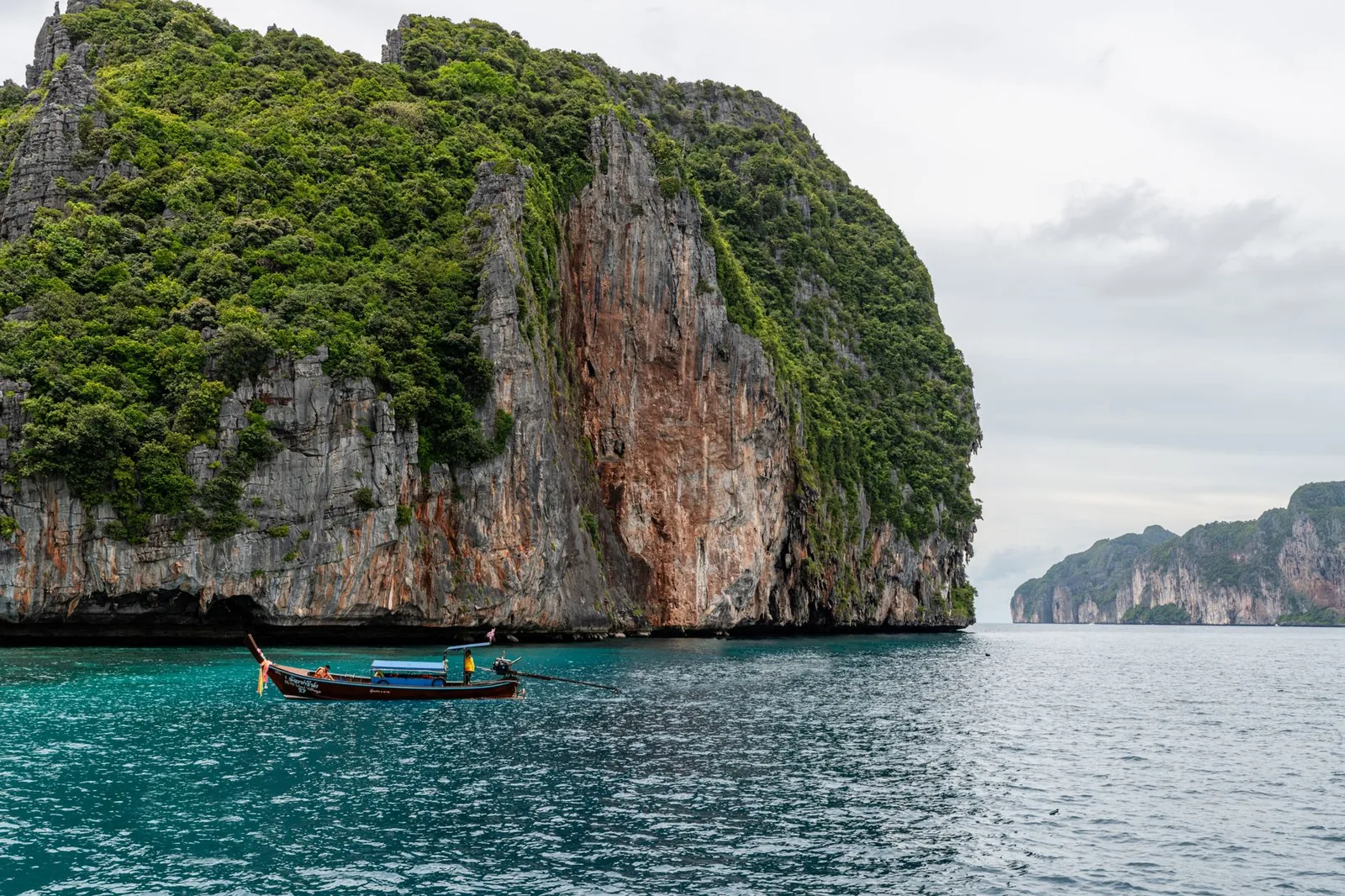
A Phi Phi Le excursion is the essential activity for most first-time visitors. A typical route may include Maya Bay, Loh Samah Bay, Pileh Lagoon and Viking Cave, although the order and stops depend on the operator, tide, weather and national-park restrictions.
Pileh Lagoon is surrounded by towering cliffs and is one of the most memorable places to see from the water. Swimming may be allowed in particular circumstances, but it should never be assumed. Follow the boat crew and park instructions, especially when conditions are busy or the tide is changing.
Viking Cave is generally viewed from the boat. It has historic rock paintings and is associated with bird’s-nest harvesting, so it should not be treated as an unrestricted walk-in attraction.
A private longtail boat can offer more control over departure time and route, while a shared excursion is usually simpler for solo travellers and couples. Whichever option you choose, check what is included, whether national-park fees are separate, and how the operator handles rough weather.
Climb to Phi Phi Viewpoint
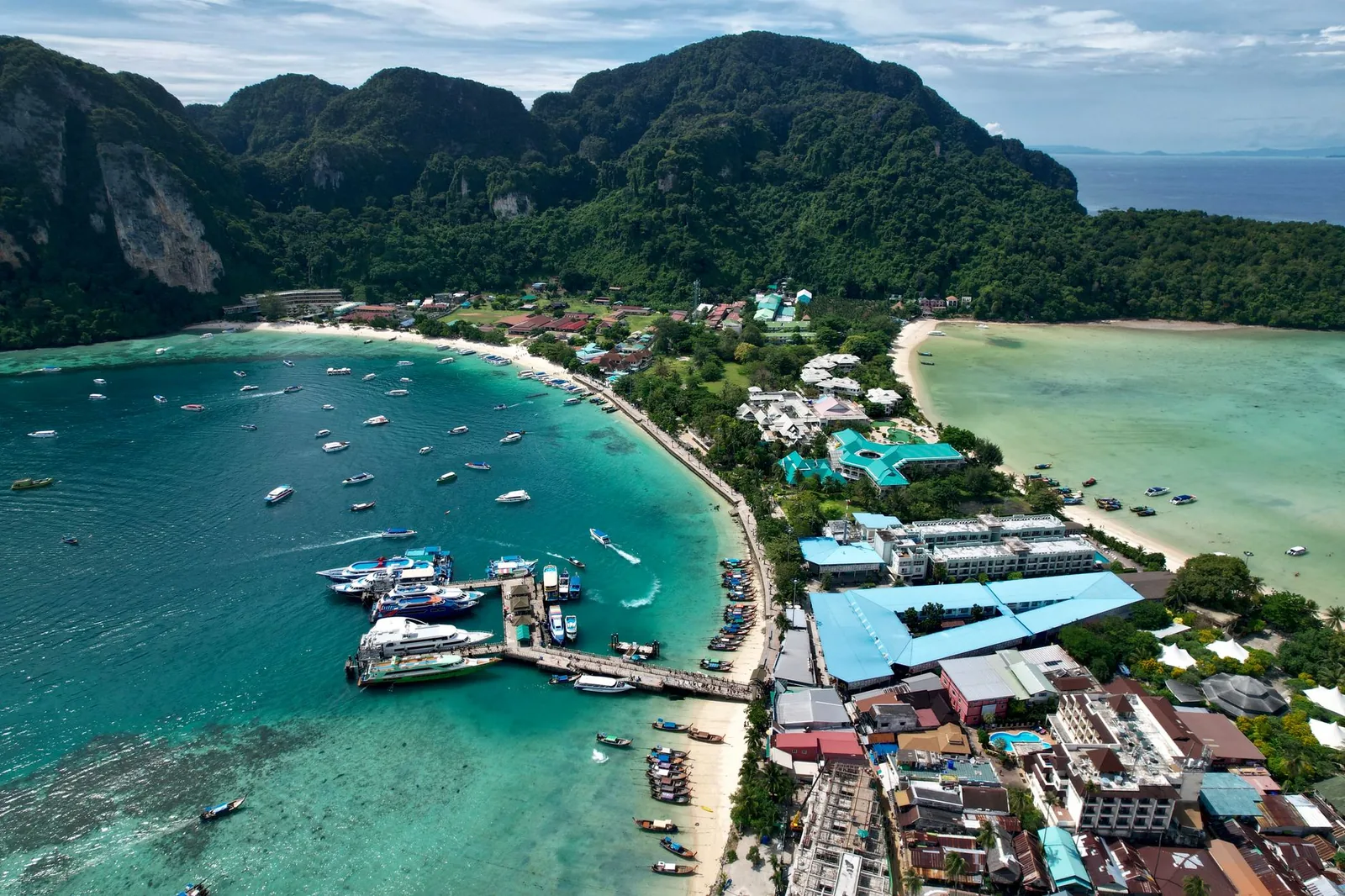
The classic view over Phi Phi Don looks across the narrow central isthmus, with Tonsai Bay on one side and Loh Dalum Bay on the other. It is one of the best ways to understand the island’s unusual shape and see how closely the main beaches sit together.
The walk is steep in places and can be hot, particularly in the middle of the day. Wear shoes with grip, carry water and allow more time than the short distance might suggest. Access arrangements and any local fee can change, so check locally before setting out.
Sunrise and late afternoon can be more comfortable than midday, but visibility depends on cloud and weather. The viewpoint is also a useful reason to stay overnight rather than relying only on a tightly scheduled day trip.
Relax at Loh Dalum Bay
Loh Dalum is the broad bay on the opposite side of the central isthmus from Tonsai. It is convenient for visitors staying in the centre and has a lively beach atmosphere, especially during the day.
The bay is shallow in places and its swimming conditions change significantly with the tide. It is close to nightlife, so accommodation nearby may be noisy in the evening. If you want easy access to bars and restaurants, that can be an advantage; if you want early nights, look farther from the central beachfront.
Visit Bamboo Island
Bamboo Island, or Ko Mai Phai, is a small island with a sandy beach and clear water. It is commonly included in snorkelling and island-hopping trips, sometimes alongside Phi Phi Le.
Bamboo Island lies within the national-park area, so conservation rules and park fees may apply. Landing access, beach conditions and the timing of a visit vary according to weather, tide and the day’s boat traffic. Bring sun protection and water, and follow any instructions about where you can walk or swim.
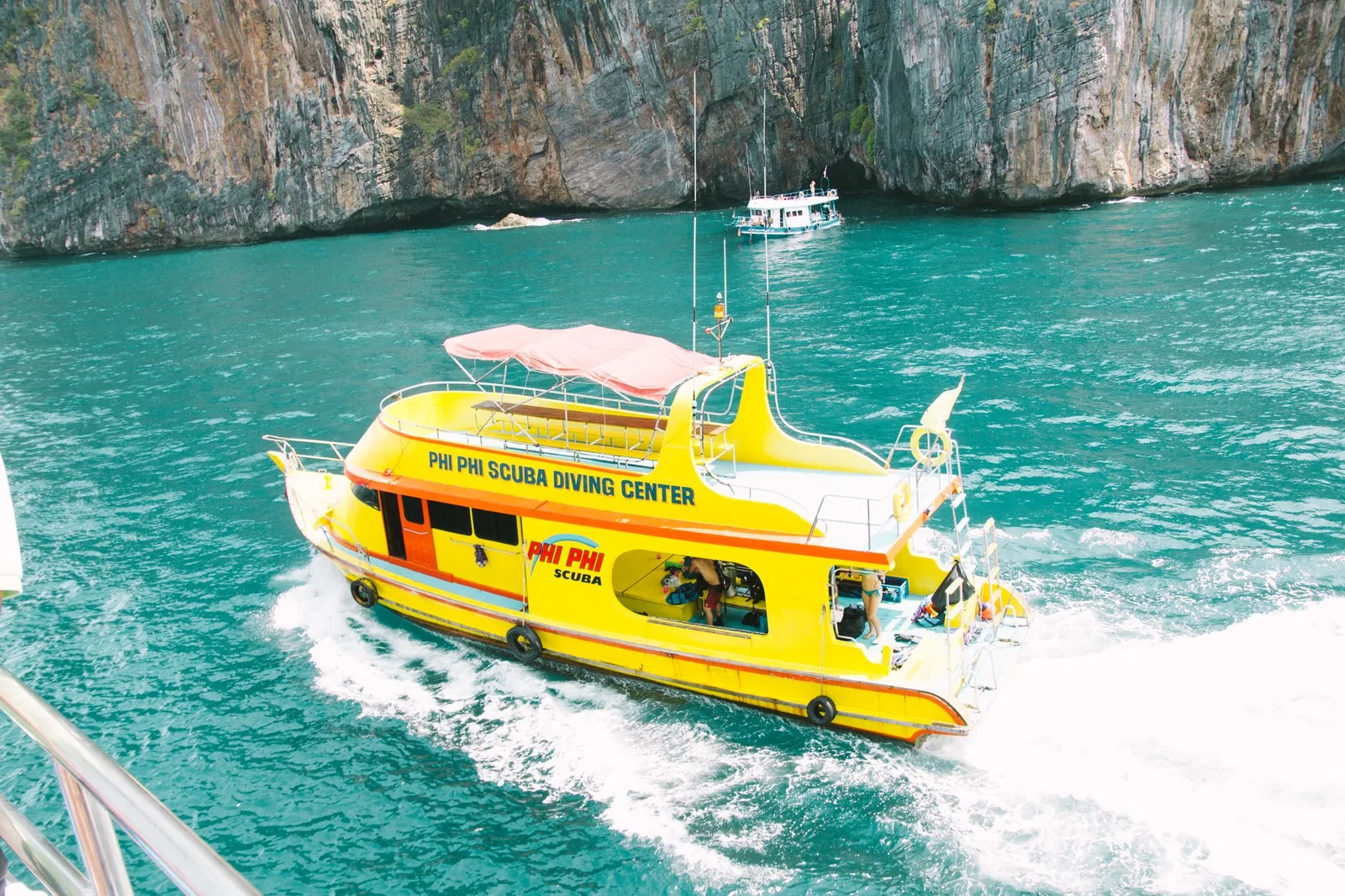
Snorkel and dive around the islands
The waters around Phi Phi offer opportunities for snorkelling and scuba diving, with many excursions visiting nearby reefs and islands such as Bida Nok and Bida Nai. Snorkelling is often combined with Bamboo Island or a Phi Phi Le route.
Choose a properly accredited dive operator and check its safety standards, equipment condition, instructor credentials, insurance arrangements and weather cancellation policy. Do not stand on coral, touch marine life or feed fish. Visibility and conditions vary, so a reputable operator should be willing to adjust the itinerary rather than prioritise a fixed schedule.
Explore Tonsai Village and Tonsai Bay
Tonsai is the practical heart of Phi Phi Don. The pier receives passenger boats, while the surrounding streets contain accommodation, restaurants, cafés, shops, tour offices and luggage services. It is the easiest base for arranging a last-minute boat trip or finding a quick meal between excursions.
The area is busiest around ferry arrival and departure periods. A local arrival, waste-management or pier charge may apply; confirm the current amount and payment method when you arrive. Central Phi Phi is pedestrian-oriented, so porters can be useful if you have heavy luggage.
Find a quieter beach
Long Beach, south of Tonsai, offers a more relaxed beach setting and accommodation away from the main nightlife. Depending on conditions, it can be reached by footpath or local longtail boat.
Loh Ba Kao, on the northern side of Phi Phi Don, has a quieter, resort-oriented atmosphere. Laem Tong is farther north and suits travellers looking for a secluded resort stay. These areas are less convenient for frequent trips to the pier and central restaurants, so confirm hotel boat-transfer arrangements before booking.
Which Phi Phi experience would you most want to build your trip around?
Best Time to Visit Phi Phi Islands
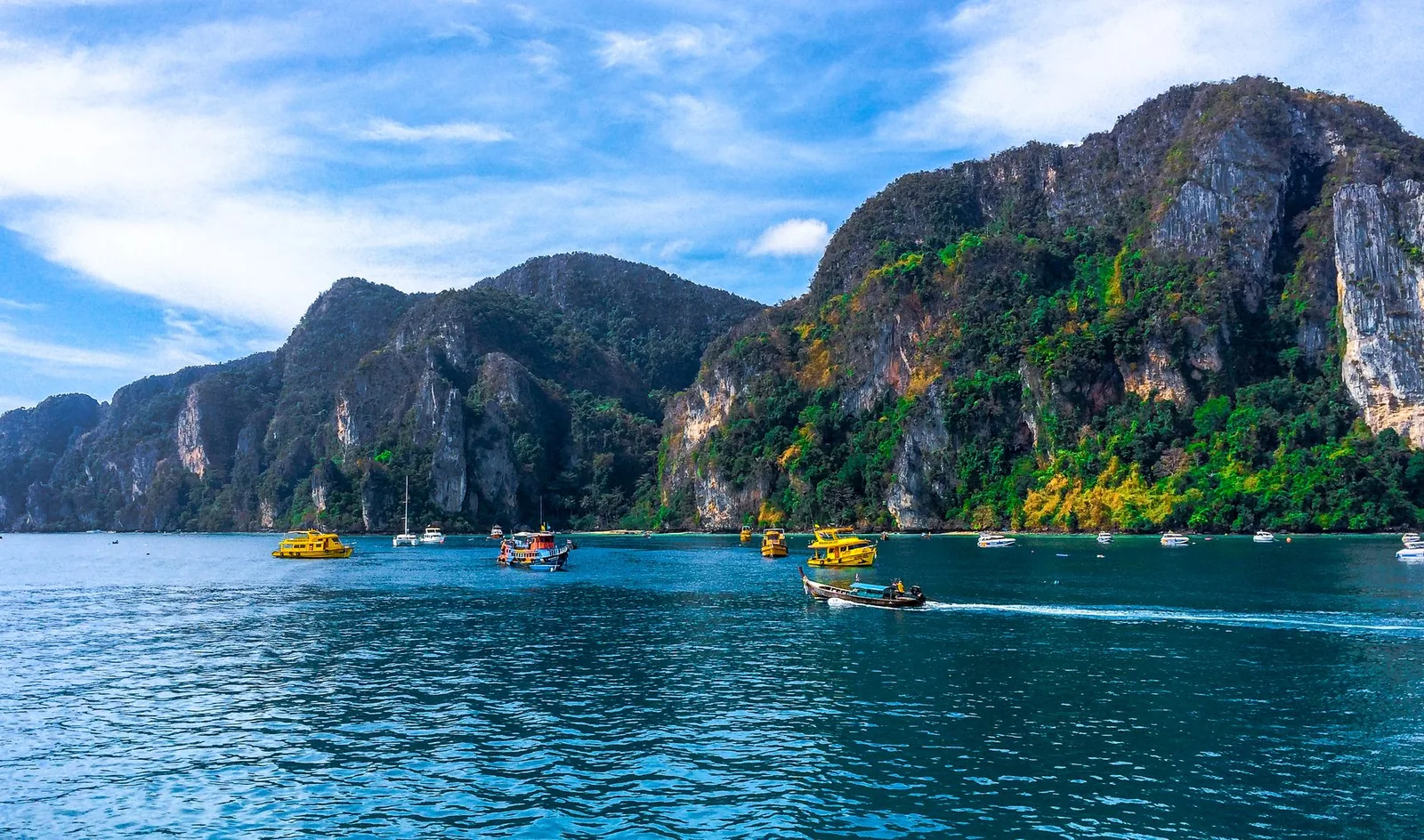
November through April is generally the most reliable period for island-hopping. Conditions are often drier and the sea can be calmer than during the southwest monsoon, although weather is never guaranteed.
December and January are popular, so accommodation and boat trips may need to be arranged in advance. March and April are usually still within the drier season but can be very warm. May is a transition month, with a greater chance of unsettled weather as the monsoon approaches.
June to October is the wetter period. Rain, rough seas, route changes and cancelled boat trips are more likely, particularly during unsettled spells. September normally falls within the annual Maya Bay closure, while October is a transition month. Maya Bay normally reopens on October 1, but confirm the official notice and current access rules before travelling.
If you visit during the wetter months, leave flexibility in your itinerary. Do not schedule an important flight immediately after an island ferry, and check the operator’s cancellation and rebooking policy before departure.
What to Eat and Drink

Tonsai Village has the largest concentration of restaurants, stalls, cafés and takeaway counters. It is easy to find food between boat trips, from simple Thai meals to international, vegetarian and vegan options.
Fresh Andaman seafood is widely available. Look for grilled fish, prawns, squid, crab and seafood versions of familiar Thai dishes, keeping in mind that quality, sourcing and prices vary between venues.
Southern Thai cooking is often strongly flavoured, with sour-spicy soups, curries and seafood dishes. Try dishes such as tom yum, southern-style curries or kaeng som when available. Local menus change seasonally, so ask what is fresh rather than relying only on a fixed list of dishes.
Fruit shakes, iced Thai tea, coffee and simple beach drinks are common around the main settlement. Use busy vendors and check that ice and water are commercially supplied if you are uncertain. Carry cash for small restaurants, stalls, local boats and other purchases, as card acceptance is not universal.
Easy Day Trips from Phi Phi Islands
Phi Phi Le
This is the essential half- or full-day excursion from Phi Phi Don, covering Maya Bay, Pileh Lagoon, Loh Samah Bay and Viking Cave. The same sights are also available as full-day trips from Phuket and Krabi, though staying on Phi Phi allows an earlier or more flexible departure.
Bamboo Island and nearby snorkelling sites
A boat trip combining Bamboo Island with nearby reefs is a good choice if you want a beach stop and time in the water. Check whether national-park fees are included and whether the itinerary changes with sea conditions.
Phuket
Phuket makes a useful before-or-after stop for international flight connections, beaches, nightlife and Old Phuket Town. Ferries to Phi Phi commonly depart from Phuket-area piers, but the pier may not be close to the airport, so allow time for the road transfer.
Krabi Town and Ao Nang
Krabi Town and Ao Nang are practical gateways for Phi Phi and bases for mainland scenery, restaurants and onward journeys to Railay. They can complement an island stay with a different pace and more space to explore on land.
Railay Beach
Railay is known for limestone cliffs, beaches and boat access from the Krabi and Ao Nang area. Confirm current boat connections rather than assuming there is a direct or year-round service from Phi Phi.
Koh Lanta
Koh Lanta is a slower, more spread-out Andaman island and can balance Phi Phi’s busy central atmosphere. Ferry connections are seasonal and weather-dependent, so verify that the route is operating before building it into a fixed itinerary.
Where to Base Yourself in Phi Phi Islands
Find places to stay. Search stays on VibrantGateways →
Accommodation is concentrated on Phi Phi Don, but the right area depends on whether you prioritise convenience, nightlife, beach access or peace and quiet.
Tonsai Village and Tonsai Bay
This is the most convenient base for first-time visitors, short stays and travellers who want easy access to the pier. You will find the broadest choice of restaurants, shops, tour agencies and budget accommodation here.
The drawbacks are noise, foot traffic and the busy atmosphere around ferry arrivals. It is a practical choice if you are staying for one or two nights and plan several excursions, but check the exact walking route from the pier and whether your accommodation is near late-night venues.
Loh Dalum
Loh Dalum is central and close to the beach, bars and nightlife. It works well for travellers who want to step directly into the island’s social scene.
Noise is the main consideration. Beachfront and nearby properties can be lively at night, so light sleepers should check recent accommodation information carefully and consider a location set back from the main entertainment area.
Long Beach
Long Beach suits visitors who want a more relaxed base while remaining within reach of Tonsai. It is beach-oriented and generally quieter than the central settlement.
Access may involve a footpath or local boat, depending on conditions. If you have large luggage, mobility concerns or a late arrival, confirm how the property handles transfers before booking.
Loh Ba Kao
Loh Ba Kao is a quieter northern area with a resort-focused feel. It is a better match for travellers who value space and a slower pace over nightlife and immediate ferry access.
Check boat-transfer times, meal options and the practical route to Tonsai. It is not the most convenient base for frequent independent trips into the centre.
Laem Tong
Laem Tong is a remote northern beach area associated with quieter resort stays and a more secluded atmosphere. It can suit couples and travellers looking for a retreat rather than a central island experience.
Boat logistics matter here. Confirm the resort’s transfer schedule, the pier used, luggage arrangements and whether services operate throughout your intended season.
Getting Around Phi Phi Islands
Phi Phi Don is compact, and most visitors walk around Tonsai Village, Tonsai Bay, Loh Dalum and the central isthmus. There is no conventional island bus or rail network, and cars and rental vehicles are not useful.
Paths can be uneven, hot and steep, particularly towards the viewpoint and outer beaches. Pack light if possible. Large wheeled cases are inconvenient on pedestrian paths, and porters may be needed to move luggage from the pier.
Local longtail boats provide coastal transfers to beaches such as Long Beach and can be chartered for private trips. Organised tours and private boats are used for Phi Phi Le, Bamboo Island and nearby snorkelling sites. App-based rideshare and normal road taxis are not practical options on the island.
Arriving from the airport
Planning your arrival? Compare flight options on BookingTabs.
There is no airport on the Phi Phi Islands. The main flight gateways are Phuket International Airport and Krabi International Airport.
From Phuket, travellers usually travel overland from the airport to Rassada Pier or another designated marina before taking a ferry or speedboat to Tonsai Pier. Some services continue to Laem Tong. From Krabi, connections generally use Khlong Jilad Pier in Krabi Town or Nopparat Thara Pier in Ao Nang.
Allow time for baggage collection, road traffic and ferry check-in. Boat schedules can change, and weather can cause delays or cancellations. Avoid arranging a tight same-day connection between a ferry and an important flight. Confirm the departure pier, luggage allowance, check-in deadline and cancellation policy directly with the operator for your travel date.
Practical Tips for Visiting Phi Phi Islands
- Reconfirm your ferry or speedboat departure time, pier, baggage terms and check-in deadline.
- Keep a buffer between an island boat and an important flight, particularly during the monsoon or busy holiday periods.
- Carry cash for small purchases, local boats, possible pier charges and park fees.
- Use reef-safe sunscreen and follow national-park instructions. Rules on prohibited sunscreen chemicals and single-use plastics may be updated.
- Do not swim at Maya Bay, touch coral, collect shells, feed wildlife, litter or fly a drone without the required permissions.
- Bring a refillable water bottle and reusable bag where practical.
- Pack light. Phi Phi’s central areas are pedestrian-oriented and large bags are awkward on uneven paths.
- Book accommodation early for Christmas, New Year and other high-demand periods, especially around Tonsai.
- Choose a reputable dive operator with clear safety, insurance, equipment and weather policies.
- Dress respectfully away from the beach. Avoid topless sunbathing and walking shirtless through non-beach areas.
- Check whether national-park fees are included in a boat tour rather than assuming they are part of the advertised price.
- Do not treat a day trip as equivalent to staying overnight. Day tours are more tightly scheduled and usually coincide with the busiest visitor periods.
Phi Phi Islands Travel FAQ
Is Phi Phi an island or a group of islands?
Phi Phi is an archipelago. Ko Phi Phi Don is the main inhabited island and tourist base, while Ko Phi Phi Le contains Maya Bay and is visited mainly by boat. Several smaller islands are part of the surrounding national-park area.
Does Phi Phi have an airport?
No. Visitors arrive by ferry or speedboat from Phuket, Krabi, Ao Nang and other Andaman ports. The principal flight gateways are Phuket International Airport and Krabi International Airport.
How many days should I spend in Phi Phi?
Two or three nights is a practical stay for Phi Phi Don, allowing time for the viewpoint, beaches and a Phi Phi Le boat trip. A day trip works for a quick overview but is more rushed and dependent on the tour schedule.
When is Maya Bay closed?
Maya Bay and nearby protected areas normally close annually from August 1 through September 30 for ecological rehabilitation and visitor safety. Confirm the current year’s dates, reopening notice and daily access rules before travelling.
Can you swim at Maya Bay?
No. Swimming in Maya Bay is prohibited under current visitor-management rules. Boats normally use Loh Samah Bay, where visitors disembark before walking to Maya Bay.
What is the best time to visit Phi Phi?
November through April is generally the most reliable period for drier weather and island-hopping. May through October can bring more rain, rougher seas and cancelled or altered boat trips.
Is Phi Phi suitable for families?
Yes, especially if you choose accommodation away from the central nightlife and select boat trips appropriate to the children’s ages. Families should plan for steep paths, strong sun, boat movement, tides and conservation rules.
Is Phi Phi suitable for a quiet holiday?
It can be, but Tonsai and Loh Dalum are busy and nightlife-oriented. For a quieter stay, consider Long Beach, Loh Ba Kao or Laem Tong, and confirm boat-transfer arrangements before booking.
Before You Go
The Phi Phi Islands reward travellers who understand their layout. Phi Phi Don is the place to stay, eat, walk and arrange excursions; Phi Phi Le is the spectacular protected landscape explored by boat; and the smaller islands add beaches, reefs and snorkelling stops.
Stay for two or three nights if your itinerary allows, rather than treating Phi Phi only as a rushed photo stop. Choose your base according to the atmosphere you want, allow flexibility around ferries and weather, and check the latest rules for Maya Bay before you travel. With realistic expectations, responsible choices and a little logistical planning, Phi Phi can be one of the most memorable stops on Thailand’s Andaman coast.
Find your stay with VibrantGateways.
Choose your travel dates and explore accommodation options for your destination.
Join the conversation
Ask a question, share a travel tip, or help another traveler plan with confidence.
Leave a comment
No account required.