
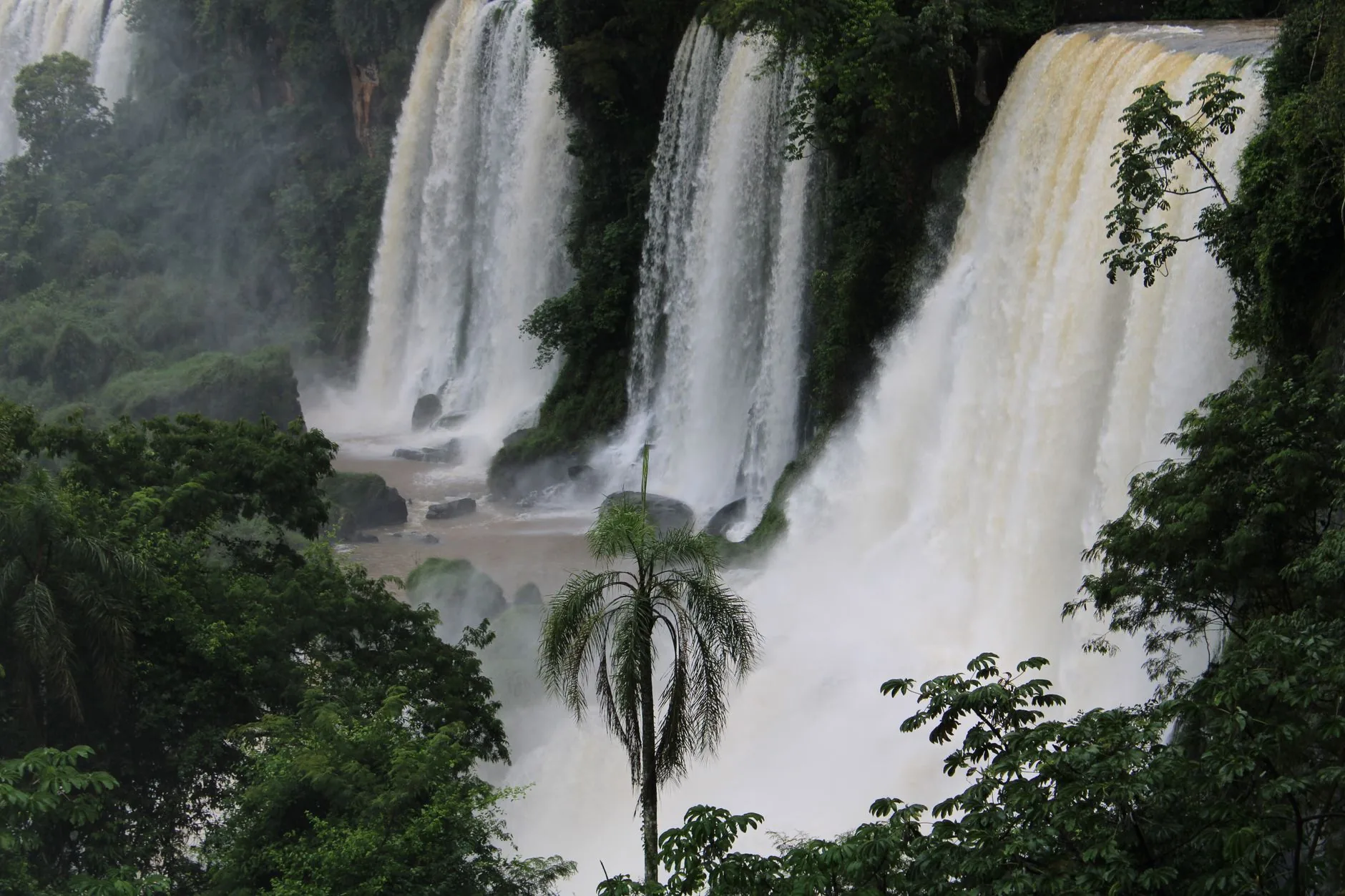
Angel Falls, Venezuela: A Practical Travel Guide
Angel Falls is not a conventional sightseeing destination. Known locally as Kerepakupai Vená, the waterfall lies deep within Canaima National Park in southeastern Venezuela, dropping from the vast Auyán-tepui into a landscape of rainforest, rivers, savanna and ancient table mountains.
Most visitors begin in Canaima village, reached by small aircraft, then continue by motorized curiara boat and guided hike when river conditions allow. A scenic flight is the practical alternative during periods of low water, or for travelers with limited time. Either way, this is an expedition-style journey that rewards flexibility, preparation and a willingness to travel beyond ordinary infrastructure.
The waterfall is widely recognized as the world’s highest uninterrupted waterfall, with a drop of 979 meters. Canaima National Park, a UNESCO World Heritage Site since 1994, covers an enormous protected landscape that also includes Canaima Lagoon, other major waterfalls, Pemón communities and the separate Gran Sabana and Monte Roraima sector.
Why Angel Falls, Venezuela Is Worth Visiting
The main reason to come is obvious: Angel Falls is an extraordinary natural landmark. Yet the waterfall is only part of the experience. Its setting is what makes the journey memorable—the red-tinted rivers, sheer tepui walls, open savanna, dense forest and long stretches of wilderness where transport still follows traditional water routes.
A trip here can combine several different experiences:
- Seeing Kerepakupai Vená from a river approach, forest viewpoint or scenic aircraft
- Traveling through the Carrao and Churún river system by boat
- Exploring Canaima Lagoon and its surrounding curtain-like waterfalls
- Learning about the Pemón people, the Indigenous communities and ancestral custodians of the tepui region
- Hiking through rainforest and uneven terrain
- Photographing Auyán-tepui, Angel Falls and the broader Guiana Shield landscape
- Extending the journey to Kavac or planning a separate trek in the Monte Roraima sector
Canaima is also a place where logistics form part of the attraction. There are no useful road connections to the falls, no normal public transport network and no guarantee that a planned boat departure will run exactly as expected. Weather, river depth, aircraft operations and local conditions all influence the itinerary.
That remoteness makes Angel Falls best suited to adventure travelers, photographers, waterfall enthusiasts and visitors comfortable with basic accommodation, limited connectivity and multi-day travel.
Weather and the Best Time to Go
There is no single best season for every type of trip. The wetter part of the year generally brings fuller waterfalls and deeper rivers, making a boat expedition more feasible. The drier part of the year may offer clearer conditions for scenic flights, but low water can make the river route unreliable or impossible.
Operators commonly present June to November as the more practical window for river travel, with July to October often associated with stronger flow. December to April can be more favorable for flyovers, although cloud and weather can still affect visibility. These are broad patterns, not fixed guarantees, so confirm conditions for your exact dates.
March to May
Conditions can be highly variable. Toward the drier end of this period, river levels may be too low for a full boat expedition. Scenic flights may be possible when visibility is good, but aircraft operations remain weather-dependent.
June to August
This is often a strong period to consider a river-based trip because rainfall tends to raise river levels. The trade-off is a greater chance of rain, cloud and delays. Low cloud can obscure Auyán-tepui, while heavy weather may affect flights and boat departures.
September to November
River levels are often favorable and waterfall flow can be impressive. However, the same weather systems that support navigation can also produce cloud, rain and transport disruption. Leave schedule flexibility and confirm the current program with your operator.
December to February
The generally drier conditions can create clearer opportunities for scenic flights. At the same time, river levels may fall enough to prevent boats from reaching Angel Falls. If you travel during this period, ask whether the river expedition is operating and consider a flyover as a backup.
How to Get Around Angel Falls, Venezuela
There is no normal road-based visitor network connecting Canaima, Angel Falls and the park’s remote attractions. Travel is organized around small aircraft, motorized boats, guided hikes and local excursions.
Arriving by air
Most itineraries begin at Canaima Airport, which uses the IATA code CAJ. Current routes and schedules can change, so confirm the operating airline and connection details directly with your lodge, tour operator or airline.
International travelers generally need to connect through an operating Venezuelan gateway, such as Maiquetía near Caracas. Domestic and international services can change with little notice, and travelers should not build a tightly timed international connection around a remote-area flight.
A lodge or operator will usually arrange the transfer from the airstrip to your accommodation. Confirm whether this is included in the package.
Traveling by boat
Motorized curiara boats are the standard transport for the river approach when water levels permit. Boats are open, exposed to spray and sensitive to changing river conditions. The journey can be long, and travelers should be prepared for sun, rain and limited storage space.
Hiking
Walking around some lodge and lagoon areas is practical, but the route toward Angel Falls includes forest trails with uneven, slippery and potentially steep sections. Fitness, sturdy footwear and balance matter. The boat-and-hike expedition is not appropriate for travelers expecting a paved or easily accessible viewpoint.
Cars, taxis and rideshares
A private car is not useful for reaching Canaima or Angel Falls. Rideshare services should not be expected, and informal transport arrangements are best avoided. Use lodge-arranged transfers and established local guides.
Build flexibility into every connection. Weather, river depth, aircraft operations and local logistics can all affect the timetable.
Best Areas to Stay in Angel Falls, Venezuela
Looking for a place to stay? Compare hotels for Angel Falls Venezuela on BookingTabs.
Angel Falls itself is not a town or resort area with a conventional hotel district. Most travelers stay in or around Canaima village, then spend nights in camps or basic accommodation during a river expedition.
Canaima village and Canaima Lagoon
This is the main visitor base for the western sector of Canaima National Park. Lodges and camps here coordinate lagoon excursions, airport transfers and departures toward Angel Falls. Staying near the lagoon is the most practical choice for travelers combining a short waterfall circuit with a longer expedition.
Accommodation standards vary. Some packages include meals, transfers, excursions and luggage handling, while others may be more limited. Ask in advance about electricity, potable water, connectivity, dietary requirements, payment methods and baggage storage.
Angel Falls and the Auyán-tepui sector
The remote falls sector is not an independent base for most travelers. Overnight stays may take place in river camps or simple accommodation as part of a guided multi-day itinerary. Facilities can be basic, and the exact arrangement depends on the operator, route and current conditions.
Do not plan to arrive independently and find accommodation at the falls. Organize the river route, guides, meals and camping arrangements before departure from Canaima.
Kavac area
Kavac has its own excursion infrastructure and is best visited as part of an organized extension. It may suit travelers interested in canyon scenery, caves, waterfalls and Pemón-connected experiences, but it should not be treated as a replacement for staying in Canaima if Angel Falls is your main objective.
Gran Sabana and Roraima sector
The eastern sector of the national park is a separate base for broad savanna landscapes, waterfalls and the Monte Roraima trek. It is useful for a longer Venezuela itinerary, not for a short overnight extension from Canaima.
Which Angel Falls experience would you most want to build your trip around?
Top Experiences in Angel Falls, Venezuela
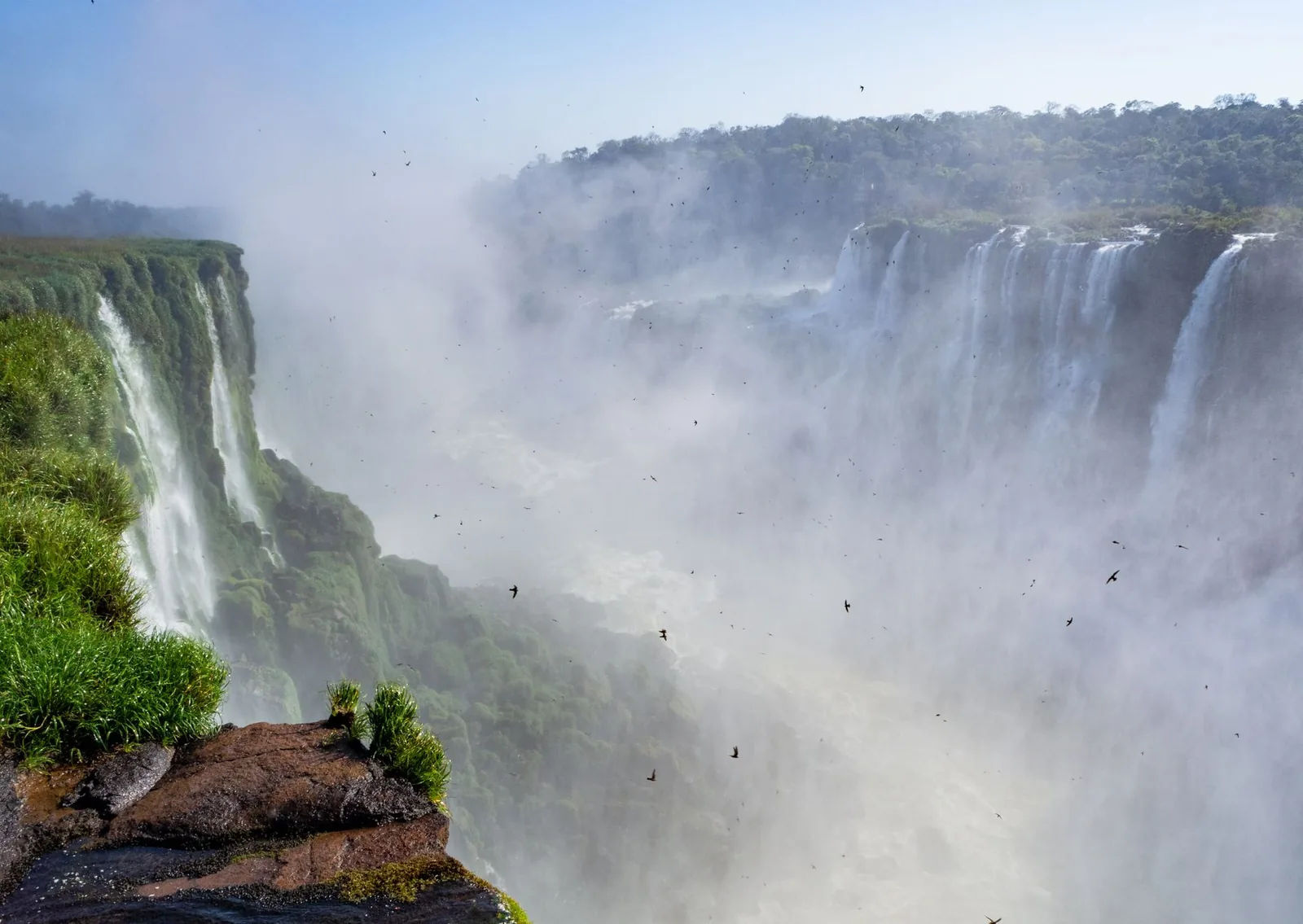
See Kerepakupai Vená, or Angel Falls
The waterfall itself is the centerpiece of any visit. Water descends from Auyán-tepui in a near-vertical drop before dispersing into spray and mist below. The Indigenous name Kerepakupai Vená is commonly translated as “waterfall of the deepest place.”
The classic approach begins in Canaima and follows the river by motorized curiara boat. Depending on water levels and the chosen route, the journey includes rapids, long stretches in an open boat and a forest hike toward a viewpoint or base area near the falls. It is an immersive way to experience the landscape, but it is not a simple excursion and can be physically demanding.
A scenic flight offers a very different perspective. From the air, travelers can see the relationship between the waterfall, Auyán-tepui and the surrounding canyon. Flyovers are particularly useful when low river levels prevent the full boat expedition. They remain dependent on cloud, visibility, aircraft availability and local operating conditions.
Do not assume that a scenic flight includes landing near the falls or reaching the base. Confirm exactly what an itinerary involves before booking.
Explore Canaima Lagoon
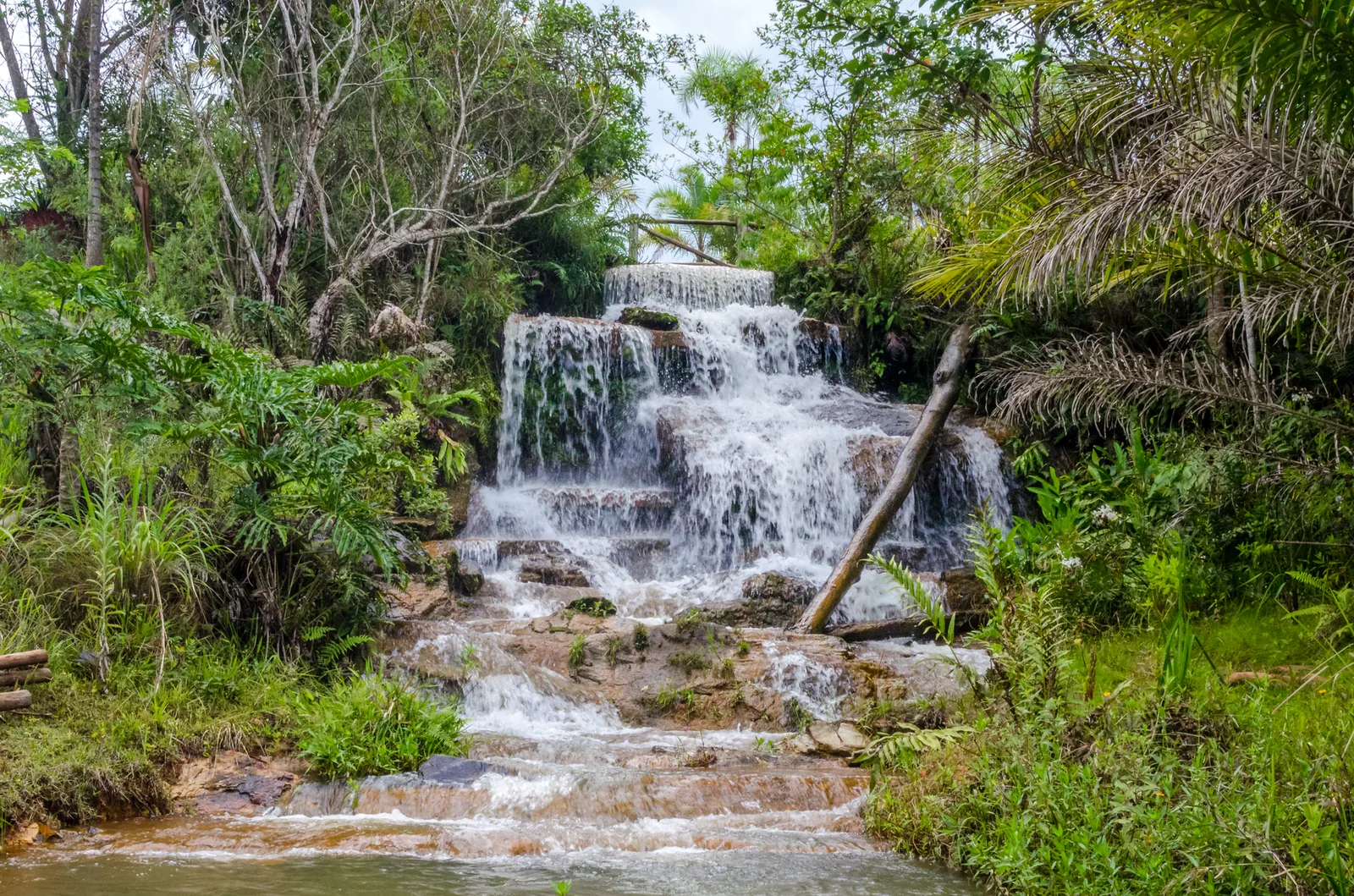
Canaima Lagoon is the most accessible major attraction from the village and usually forms part of a shorter local excursion. Its water is known for a reddish color, while pale or pinkish beaches contrast with the surrounding forest and tepui scenery.
Several waterfalls surround the lagoon, creating a broad landscape of falling water rather than a single viewpoint. Boat excursions commonly include views of Salto Hacha, Salto Golondrina, Salto Wadaima and Salto Ucaima, although the exact route depends on water levels and the current operating program.
Canaima Lagoon is a good introduction to the national park before undertaking a longer Angel Falls expedition. It also gives travelers a worthwhile experience if weather or river conditions disrupt the main itinerary.
Swimming may be possible at selected sites, but conditions vary. Currents, slippery rock and changing water levels mean that visitors should follow local guidance rather than entering the water independently.
Visit Salto Hacha and the lagoon waterfalls
Salto Hacha is one of the best-known waterfalls around Canaima Lagoon. Depending on the route and season, visitors may approach it by boat, walk near the falls or see it as part of a wider lagoon circuit.
Salto Golondrina, Salto Wadaima and Salto Ucaima are also associated with the lagoon area. These falls are not interchangeable with Angel Falls: they are shorter, more accessible attractions close to Canaima village, while Angel Falls lies deep in the Auyán-tepui and Churún River sector.
Ask your lodge or guide which waterfalls are included in the current excursion. Names and routes can be used broadly in itineraries, while actual stops may change with water conditions.
Travel along the Churún River
The Churún River drainage is central to the journey toward Angel Falls. Traveling by boat offers a close view of the riverbanks, forest and cliffs, but it also requires patience. A river expedition can involve several hours in an open boat, spray, rapids and pauses dictated by navigation conditions.
Bring a dry bag for cameras, phones, passports and medication. Wear clothing that dries quickly and listen closely to the boat crew, particularly when boarding, disembarking or moving through rapids.
The boat trip is not merely a transfer. It is one of the defining experiences of visiting Angel Falls and a chance to see the park at the pace of its rivers.
Learn about Pemón culture
Canaima is culturally connected to the Pemón people, whose communities have longstanding relationships with the park’s rivers, waterfalls and tepuis. Local operators and community-connected guides can provide context that is not available from a viewpoint alone.
Cultural visits should be approached respectfully. Ask permission before photographing people, homes, ceremonies or places considered sacred. Follow local instructions about where to walk, what to touch and how to behave around community sites.
Trying regional foods such as casabe, a cassava-based flatbread, can also provide a small connection to local culinary traditions. Kachiri, a traditional fermented drink, may be available on some community or cultural itineraries, although visitors should not assume it will be offered.
Add Kavac to a longer itinerary
Kavac is a separate excursion area associated with Pemón territory, forest, caves, canyons and waterfalls. It offers a different perspective on the Canaima landscape and can suit travelers who want more than the lagoon and Angel Falls route.
Kavac is not a spontaneous side trip from Canaima village. Treat it as a separate excursion or extension, and confirm transport, guide arrangements and current operation before committing to a schedule.
Plan a separate Monte Roraima trek
Monte Roraima is one of the best-known tepuis in the wider Canaima landscape, rising to approximately 2,810 meters. Its summit trek is a major multi-day adventure involving a separate route and substantial preparation.
The Roraima and Gran Sabana sector is geographically and logistically distinct from Canaima Lagoon and Angel Falls. It is not a practical day trip from Canaima village. Travelers who want to combine both experiences should plan them as separate expeditions and allow sufficient time for transfers, weather delays and recovery between activities.
What to Eat in Angel Falls, Venezuela
Food is usually organized through lodges, camps and tour operators rather than independent restaurants. Remote itineraries commonly include meals, but menus and dietary substitutions vary. If you have allergies or follow a vegetarian, vegan or medically restricted diet, request confirmation before arrival.
Casabe, a cassava-based flatbread, is associated with Indigenous and regional Venezuelan cuisine and is one of the foods connected with Pemón communities. Kachiri is a traditional fermented drink associated with Pemón culture; availability depends on the community and itinerary.
Ask what drinking water, snacks and packed lunches are included. Shops and restaurants should not be assumed to exist in remote camps. Carry reusable or sealed supplies according to the operator’s environmental rules, and avoid leaving packaging behind.
Places to Visit Beyond Angel Falls, Venezuela
Because Angel Falls is remote, the most useful excursions are day trips from Canaima rather than from the waterfall itself.
Canaima Lagoon and waterfall circuit
This is the easiest major excursion from Canaima village. It combines lagoon scenery with views of Salto Hacha, Golondrina, Wadaima and Ucaima. It is a good choice for a shorter visit or for a first day before a river expedition.
Scenic flight over Angel Falls
A flyover can be organized from Canaima when weather and aircraft operations allow. It is particularly useful during low-water periods, when boats may not reach the falls, or for travelers with limited time. Confirm the route, flight duration, aircraft arrangements and weather policy before booking.
Kavac excursion
Kavac offers caves, canyons, waterfalls and forest scenery in a different part of the Canaima region. It is better understood as a full excursion or extension rather than a quick add-on.
Angel Falls river expedition
The classic river route is not a day trip. Allow approximately four to five nights for a river-and-hiking itinerary, although the actual schedule depends on water levels, weather, boat capacity and operator arrangements.
Monte Roraima trek
Monte Roraima is a separate multi-day adventure in the Gran Sabana and eastern Canaima sector. It requires its own planning and should not be added as a rushed day trip from Canaima.
Good to Know Before You Go
- Treat Angel Falls as an expedition destination, not a simple sightseeing stop.
- Book through an established lodge or operator able to coordinate flights, boats, guides and contingency plans.
- Allow buffer days for cloud, heavy rain, low river levels, aircraft delays and logistical changes.
- Confirm whether your package includes flights, transfers, meals, park or community fees, guides, camping equipment and luggage allowances.
- Use soft luggage and ask about the current baggage limit for small aircraft.
- Pack quick-drying clothing, a waterproof layer, sturdy footwear, sun protection, insect repellent, a headlamp, personal medication and dry bags.
- Expect limited connectivity, limited access to cash and little access to medical care or replacement equipment.
- Do not swim or walk near waterfalls, rapids or river edges without local guidance.
- Respect Pemón communities, sacred places, photography requests and local environmental rules.
- Check visa, vaccination, insurance and entry requirements for your nationality before booking.
- Obtain insurance that explicitly covers Venezuela, remote-area evacuation, river travel, small aircraft, adventure activities and missed connections.
- Review current government travel advice before departure. Advisories for Venezuela and Bolívar State can include serious warnings relating to security, transport, health infrastructure and disruption.
The most common planning mistakes are assuming the falls are beside a conventional town, booking only one night in Canaima, expecting the river expedition to operate year-round or confusing a scenic flyover with reaching the falls by boat and foot. Large hard-sided suitcases, fixed schedules and a lack of contingency planning can make the journey considerably more difficult.
Common Questions About Angel Falls, Venezuela
Where is Angel Falls?
Angel Falls is in Canaima National Park in Bolívar State, southeastern Venezuela. It drops from Auyán-tepui in the western sector of the park.
How do you get to Angel Falls?
The usual starting point is Canaima village, reached by small aircraft. From there, travelers may continue by motorized curiara boat and guided hike when river conditions permit. A scenic flight is the alternative when river levels are too low or when time is limited.
Can you visit Angel Falls during the dry season?
Yes, but a boat trip may not operate when river levels are too low. Dry-season travelers should consider a scenic flight and confirm current river conditions with the operator.
How many days do you need for Angel Falls?
Allow at least three nights in the Canaima area for a short, flyover-focused visit. A river-and-hiking experience generally requires approximately four to five nights, subject to weather, schedules and river conditions.
Is Angel Falls suitable for children or older travelers?
It depends on the itinerary. The river route involves rapids, long boat travel and uneven or slippery hiking. Some operators recommend the demanding excursion only for children above a certain age and may not recommend it for older travelers. Ask for a current assessment based on fitness, mobility and the exact route.
Is Angel Falls safe to visit?
The natural environment requires careful preparation, and current government advisories identify wider security, health infrastructure and transport risks in Venezuela. Review the latest official advice, use an established operator and make sure insurance covers remote-area evacuation and itinerary disruption.
What is the airport code for Canaima?
Canaima Airport uses the IATA code CAJ. Airline service and routing should be checked directly because schedules can change.
Is Angel Falls the highest waterfall in the world?
It is widely recognized as the world’s highest uninterrupted waterfall, with a drop of 979 meters. Descriptions of the total waterfall measurement can vary, so the most precise wording is that Angel Falls has the world’s highest uninterrupted drop.
Before You Go
Angel Falls is worth considering if you want a remote, landscape-focused journey rather than a quick landmark visit. The waterfall is spectacular, but the wider experience includes tepui country, river travel, rainforest hiking, Canaima Lagoon and the living cultural landscape of the Pemón people.
Plan it as an expedition. Choose between a river-and-hiking itinerary and a scenic flight based on the season, allow time for disruption, pack lightly and verify every current detail before departure. With realistic expectations and a flexible schedule, Angel Falls can become one of South America’s most memorable wilderness journeys.
Inspired? Start planning your trip.
Move from inspiration to planning with BookingTabs — explore hotels, tours and travel options in one place.
Join the conversation
Ask a question, share a travel tip, or help another traveler plan with confidence.
Leave a comment
No account or email required.